Staying Active With Limited Mobility (Every Bit Still Counts)

Quick Answer: Limited mobility makes movement matter more, not less, because disuse accelerates the loss of strength and function. Seated strength work, range-of-motion exercises for every joint, supported standing, and water-based movement are all genuinely available — done in short, frequent sessions rather than long ones. Work with your doctor or physiotherapist, and count maintained function as real success.
Most fitness advice assumes you can stand up, get down on the floor, and walk out the door. When you can’t do some or all of that, the advice stops applying within about two sentences.
The conclusion people draw from that — that exercise is simply off the table — is both understandable and genuinely harmful.
Because the truth runs the other way. When mobility is limited, movement becomes more important, and a surprising amount of it is still available to you.

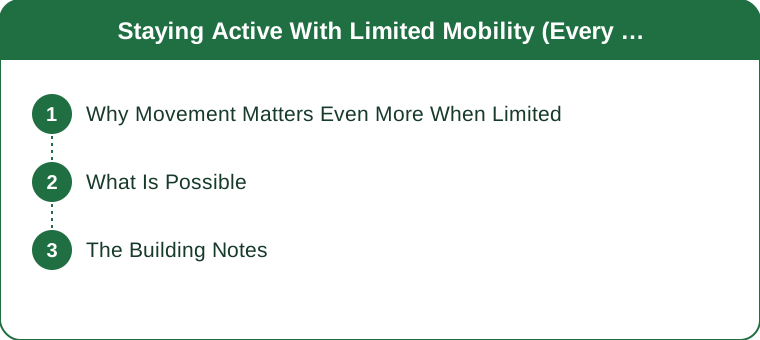
Why Does Movement Matter More When Mobility Is Limited?
Disuse accelerates decline. Muscle strength drops measurably during even short periods of inactivity, and it drops faster in older adults. When you’re already working with a reduced range, losing further strength has an outsized effect — it’s the difference between transferring from a chair independently and needing help.
The goal is function, not fitness. Nobody here is chasing a race time. The objective is standing from a chair, reaching an upper cupboard, getting to the bathroom at night, holding a grandchild. Every one of those is a trainable capacity.
Strength is independence, quite literally. The strength to rise from a seated position is the single capability most closely tied to living independently. It’s also one of the most responsive to training, at any age.
Something genuinely beats nothing. This isn’t consolation. Small amounts of movement, done frequently, produce measurable benefits in strength, circulation, mood, and joint comfort. The gap between zero and a little is much bigger than the gap between a little and a lot.

What Exercise Is Actually Possible?
More than most people assume. Eight genuine options:
Seated and chair exercises. A full routine from a stable chair can cover arms, shoulders, core, and legs — seated marches, leg extensions, arm raises, seated twists. This is the backbone of most limited-mobility programs.
Seated strength with light weights or bands. Resistance bands are ideal here: they’re cheap, adjustable, and safe from a seated position. Start with 1-2lb weights or the lightest band and build from there. Strength gains happen at any starting point.
Range-of-motion work. Gentle, deliberate movement of every joint through whatever range you have — ankles, knees, hips, wrists, shoulders, neck. This is the most protective category, because range that goes unused tends to be lost.
Supported standing work. Holding a sturdy counter or the back of a stable chair, you can do heel raises, mini squats, hip abductions, and standing marches. The support removes the balance risk.
Balance work with support. Where it’s safe and cleared with your provider, holding a counter and shifting weight, or practising standing with a narrower base, directly reduces fall risk.
Water-based movement. Water unloads the joints while providing resistance in every direction. For many people with arthritis or joint pain, it’s the only environment where full-range movement is comfortable.
Breathing and postural work. Available from any position, including lying down. Diaphragmatic breathing supports circulation, helps with pain management, and costs nothing.
Short, frequent sessions. Five minutes, four or five times a day, is often more achievable and just as valuable as one 25-minute block — and much kinder on stiffness and fatigue.
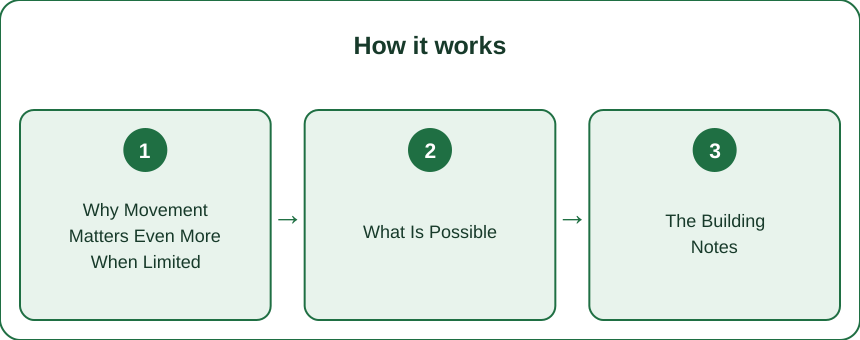
What Nobody Tells You About Exercising With Limited Mobility
Maintaining is winning. Progress in this context often means not declining — and that’s a genuine result worth being proud of, not a consolation prize. If you can do the same things this year that you could last year, the program worked.
The first ten minutes of the day are the hardest, and that’s normal. Morning stiffness is a feature of most joint conditions, not a sign of damage. A short morning stiffness routine done in bed or in a chair takes the edge off before you have to move for real.
Increments should feel almost insultingly small. Adding one repetition, or moving from a 1lb to a 2lb weight, is the right size of jump. Big jumps produce flare-ups, and flare-ups produce weeks off.
A physiotherapist is worth more than any online program. They can assess what’s safe for your specific condition and build around it. Even one or two sessions to set a program is a good investment — ask your doctor for a referral.
Pain that lingers is information, not weakness. Some discomfort during movement is often expected; pain that’s sharp, or that persists for hours afterward, means the dose was wrong. Scale back and tell your provider.
Chair choice matters more than you’d think. A stable, armless dining chair on a non-slip surface is safer for seated work than an armchair or anything on wheels.
How Do You Build a Routine That Lasts?
Start with your provider. Your doctor or physiotherapist knows your specific limitations and contraindications. This isn’t a formality — it’s what makes the rest safe.
Start where you are, not where you were. Whatever you can do today is the correct starting point.
Choose consistency over intensity. Five minutes daily beats thirty minutes once a week by a wide margin, and it’s far more sustainable.
Put safety first. Stable seating, support within reach, clear floor space, no rugs, and someone within earshot if balance is a concern.
Anchor it to something. Attach the session to an existing daily event — after breakfast, during a specific TV programme. That does the remembering for you.
Mini FAQ
Can I build strength while seated?
Yes. Seated resistance work with bands or light weights produces genuine strength gains in arms, shoulders, and legs. The muscles don’t know whether you’re standing — they respond to the load.
How often should I exercise with limited mobility?
Most guidance points toward daily gentle movement, with strength-focused work two or three times a week. Short sessions repeated through the day count fully toward this and are often easier on stiffness and fatigue.
What if it hurts?
Distinguish between working discomfort and warning pain. Mild muscle effort that fades soon after is usually fine; sharp pain, joint pain that increases, or soreness lasting more than a day means reduce the range or load and check in with your provider.
TL;DR:
- Disuse accelerates decline, so movement matters more when mobility is limited, not less.
- Available options: seated exercises, seated strength with bands or light weights, range-of-motion work, supported standing, supported balance, water movement, breathing and posture work.
- Short frequent sessions (5 minutes, several times a day) beat one long one.
- Involve your doctor or physiotherapist, start where you are, and progress in very small increments.
- Maintained function is a real success — not declining is the win.
General information, not medical advice. Talk to your doctor or physiotherapist before starting a new exercise routine, especially with an existing condition or recent injury.
Keep Reading
This article is for general informational and styling purposes only. Fit, sizing, and product availability may vary.