The Rusty Robot Morning: A 5-Minute Un-Stiffening Routine for 60+

Quick Answer: A simple 5-minute routine — bed stretches, a window warm-up, ten sit-to-stands, and one lap of the house — loosens stiff joints after 60 faster than lying still and waiting for it to pass. Do it before your first coffee finishes brewing, and most mornings the “rusty” feeling fades within minutes.
Some mornings your body boots up like an old computer — loading, loading, one hip still buffering while you stare at the ceiling wondering if today’s the day it just doesn’t turn on. If you’re over 60, you already know this feeling on a first-name basis. The good news is that morning stiffness is normal physiology, not a verdict on your future, and it responds well to a short, gentle routine you can finish before the coffee maker beeps.
Why are joints so stiff first thing in the morning?
Overnight, you’re mostly still for six to eight hours. Joint fluid that normally lubricates movement settles, and the tissues around your joints — tendons, ligaments, the muscles holding everything together — cool down and tighten up in the absence of motion. That’s it. There’s no injury happening while you sleep; your joints are just waiting for the signal to get moving again.
The fix isn’t intense exercise. It’s the opposite — small, deliberate movements that tell your joints the day has started, whether they’re on board yet or not.

What’s the fastest way to loosen up stiff joints in the morning?
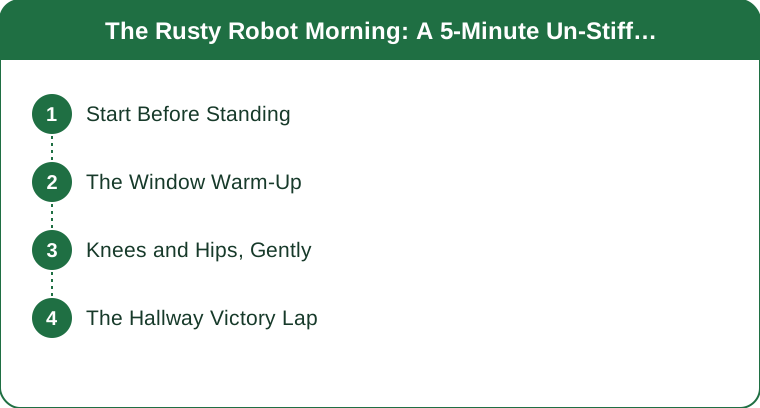
Here’s the full five-minute sequence, broken into four short stages:
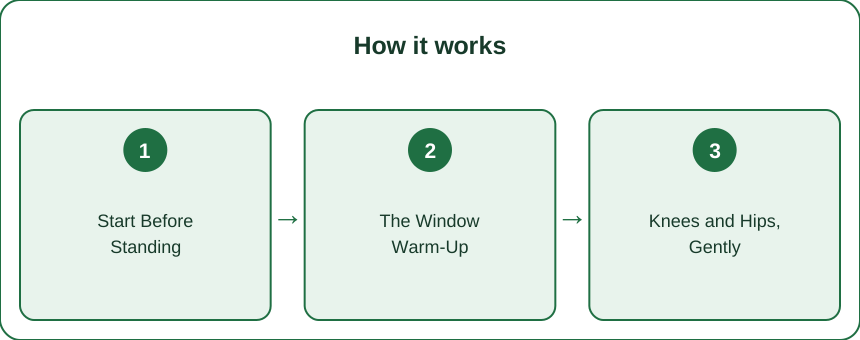
1. Start before standing (about 30 seconds). While you’re still in bed: ankle circles, knee hugs, and one full-body reach like you actually mean it. This tiny bit of movement while horizontal wakes up the joints before gravity and body weight get involved.
2. The window warm-up (about a minute). Move to your brightest window and do ten arm circles, ten gentle torso twists, and ten shoulder rolls. Morning light helps set your internal body clock, and the circles loosen your shoulders at the same time — two birds, one pajama session.
3. Knees and hips, gently (about two minutes). Ten slow sit-to-stands from a sturdy, non-wobbly chair. This might be the single most useful exercise in senior fitness, and it disguises itself as simply standing up repeatedly. It builds leg strength, wakes up the hips and knees, and pays off every time you need to get off a bus, a low couch, or an airplane seat.
4. The hallway victory lap (about a minute). Finish with one deliberate, unhurried lap of the house, standing as tall as you comfortably can. By the time you reach the kitchen, you generally feel like a functioning person again — right around when the coffee’s ready.

Should you push through morning stiffness or rest instead?
Gentle movement almost always beats staying still. Resting longer tends to let stiffness settle in further, while slow, controlled motion increases blood flow to the joint and gets that thickened fluid moving again. The key word is gentle — this routine isn’t a workout, it’s a wake-up call for your joints.
That said, there’s an important line between normal morning stiffness and something that needs a professional’s eyes. If stiffness lasts well past an hour, comes with noticeable swelling or redness, or is limited to one joint that suddenly got much worse, it’s worth mentioning to a doctor rather than assuming it’s routine aging. Most morning stiffness is ordinary and manageable — but ruling out arthritis flare-ups or other issues is a five-minute phone call, not an overreaction.
What Nobody Tells You About Morning Stiffness
- It’s not really about age — it’s about stillness. Anyone who lies motionless for eight hours gets some version of this. Age just makes the effect more noticeable and the recovery a bit slower.
- Consistency matters more than intensity. A gentle five minutes daily beats an ambitious twenty minutes done twice a month. Your joints respond to routine, not heroics.
- The chair sit-to-stand is doing more than it looks like. It’s quietly one of the best predictors of functional independence as people age — it just doesn’t look impressive, so it gets skipped.
- Cold rooms make it worse. If your bedroom runs chilly, stiffness tends to feel more pronounced. A warm robe or a few extra minutes under the blanket before starting can help.
FAQ
How long should morning stiffness normally last?
For most people over 60, stiffness eases within 30 to 60 minutes of starting to move, often faster with a deliberate routine like this one. Stiffness that regularly lasts much longer, or is paired with swelling, is worth discussing with a doctor.
Do I need any equipment for this routine?
No — just a sturdy chair for the sit-to-stands and a bit of floor space for the hallway lap. That’s part of the appeal: nothing to buy, nothing to set up, no mat required.
Can this routine help with arthritis, or just general stiffness?
Gentle daily movement is commonly recommended alongside medical treatment for arthritis-related stiffness, since motion helps joint fluid circulate. It’s not a replacement for a doctor’s care plan, but it’s a reasonable, low-risk addition — check with your physician if you have a diagnosed joint condition.
TL;DR
- Morning stiffness after 60 comes from hours of overnight stillness, not damage — it’s normal and very manageable.
- The five-minute fix: bed stretches, a window warm-up, ten chair sit-to-stands, then one lap of the house.
- Sit-to-stands are the routine’s MVP move — simple, but genuinely valuable for long-term mobility.
- Gentle movement beats resting longer when it comes to easing stiffness.
- See a doctor if stiffness lasts well past an hour, involves swelling, or is isolated to one joint.
Keep Reading
This article is for general informational and styling purposes only. Fit, sizing, and product availability may vary.