The Sit-to-Stand Test After 60: What Getting Out of a Chair Says About Your Balance

Quick Answer: Standing up from a chair without using your hands is one of the simplest checks for leg strength and balance. If it’s getting harder, that’s a useful signal, not a verdict. Chair-based strength work can rebuild this skill, and most people feel the difference within several weeks of steady practice.
You stood up from the couch this morning and felt a small pause before your legs took over. Maybe you grabbed the armrest without thinking. Most people don’t notice these moments until they start to add up, but the chair is one of the best places to check how your body is really doing.

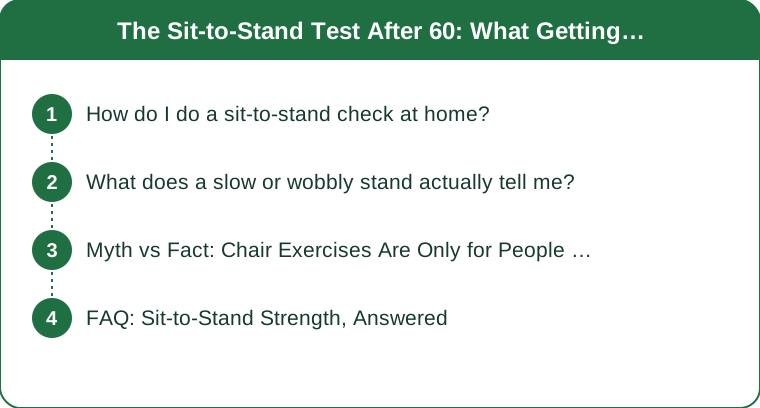
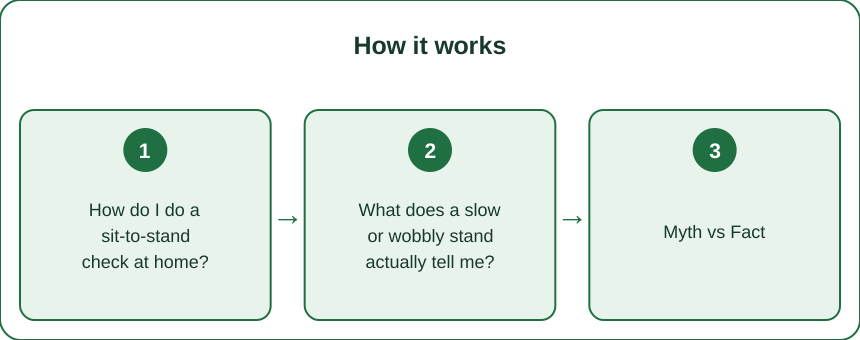
How do I do a sit-to-stand check at home?
Use a sturdy chair with a firm seat, not a rolling office chair. Sit near the front edge with your feet flat, about hip-width apart, and cross your arms over your chest.
Stand up and sit back down, and count how many full reps you can do in 30 seconds. This is the same idea as the 30-second chair stand used in many older-adult fitness assessments. If you feel dizzy, short of breath, or unsteady, stop, sit down, and talk to your doctor before you try again.
Keep your results private, and compare them with yourself over time, not with a neighbor or a chart.
What does a slow or wobbly stand actually tell me?
Standing up uses your quads, glutes, and core, and it asks your balance system to adjust as your weight shifts forward. A slow or wobbly stand can point to a few things: leg muscles that have lost some strength, less confidence in your balance, a sedentary stretch, or a side effect of medication.
Try not to diagnose yourself from one reading. Look for patterns. If you need your hands every time, or you feel you might fall, bring that to your provider, who can check your balance and medications in more detail.
The good news is that this movement responds well to practice. Most people can build it back with simple, repeated work.

Myth vs Fact: Chair Exercises Are Only for People Who Are Already Weak
Myth: If you can stand up easily, you don’t need chair work, and if you struggle, chair work is just for beginners.
Fact: Sit-to-stand is a strength skill for everyone. Think of the chair as a stable starting point. You can make the movement harder by lowering the seat, slowing the lowering phase, or holding light weights, and you can make it easier by using the arms of the chair.
Try 2 sets of 8 slow reps, lowering for a count of three each time. Most people find the second set feels noticeably steadier than the first.
FAQ: Sit-to-Stand Strength, Answered
Is it normal to need my hands to stand up?
It’s common, especially after a long period of low activity. It’s a sign to build strength, not a reason to panic. Keep practicing with the chair and reduce how much you lean on your arms over time.
How often should I practice?
Most people do well with three short sessions a week. Consistency matters more than intensity, so stop before you feel shaky.
When should I call a doctor?
Get help promptly if you feel dizzy, faint, or unsteady, have a fall, or notice sudden weakness on one side of the body. Those signs need a professional check, not a workout.
This is general information, not medical advice.
TL;DR:
- The sit-to-stand check is a useful gauge of leg strength, not a final score.
- Use a sturdy chair, track your own progress, and stop if you feel dizzy.
- Build with 2 sets of 8 slow reps, 3 days a week.
- Get medical help quickly after any fall or sudden weakness.
Chair strength is one of the most practical habits you can keep for daily life.
Keep Reading
This article is for general informational and styling purposes only. Fit, sizing, and product availability may vary.