Grip Strength After 50: A Simple Home Test

Quick Answer: Grip strength is a simple, low-cost gauge of how strong your muscles are overall. You can get a rough read at home with a towel or a squeeze ball, and tracking it over months tells you more than a single test. Improving it usually takes about two to three weeks of regular, short sessions.
You reach for the jar lid and it won’t budge. Or you carry the grocery bags and your fingers ache halfway up the stairs. Most people shrug it off as getting older, but your grip is one of the easiest strength signals you have, and it changes in ways you can track.
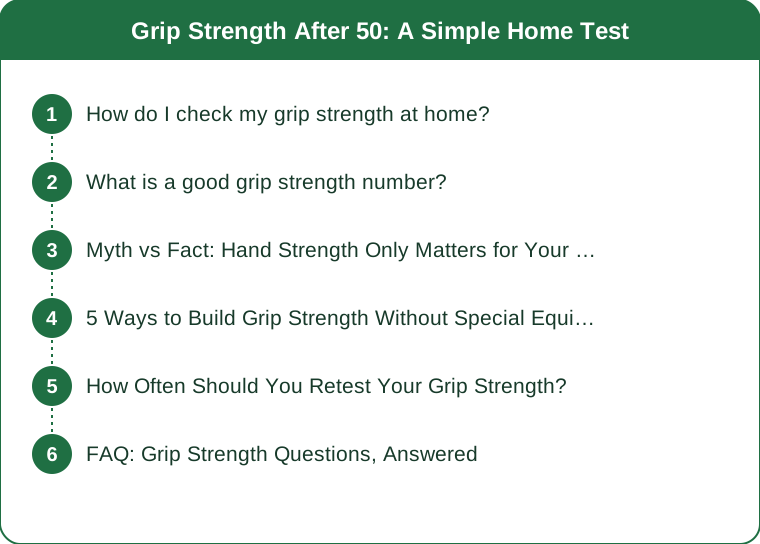
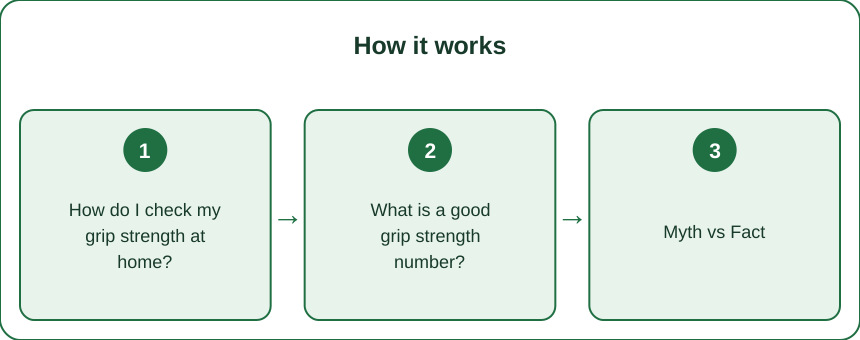
How do I check my grip strength at home?
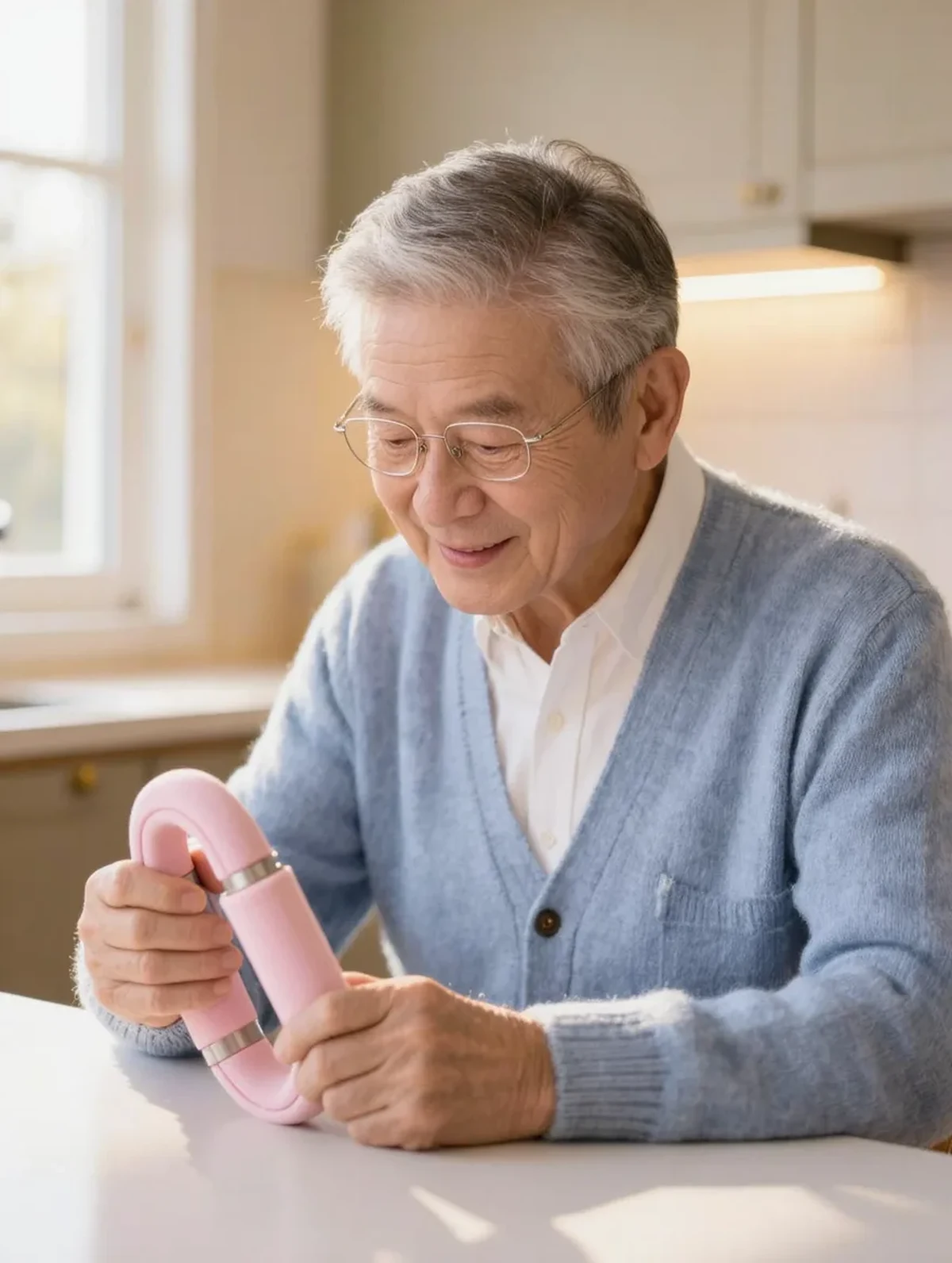
A basic home check needs only a sturdy bathroom towel and a timer. Roll the towel tightly, hold one end in your hand with your elbow bent at 90 degrees, and squeeze as hard as you can for five seconds. Rest for a minute, then repeat on the other hand.
Keep the test the same each time. Use the same towel, the same hand order, and the same time of day. Note which side is stronger, because a small difference is normal.
A clinic uses a dynamometer for an exact reading, but the towel test works well for tracking your own change over time.
What is a good grip strength number?
Norms vary by age, sex, and body size, so there is no single target that fits everyone. The more useful question is whether your number is stable or dropping.
Here is a practical way to read it:
- Stable or rising over several months means your overall strength is holding.
- Dropping by more than a small amount over a season is worth bringing up with your doctor.
- A large gap between hands is worth noting, especially if one hand feels weak or clumsy.
Track your numbers in a notebook. A trend over six months tells you far more than one good or bad day.
Myth vs Fact: Hand Strength Only Matters for Your Hands
Myth: Grip is just about your fingers and forearms, so it has nothing to do with the rest of your body.
Fact: Grip strength reflects how much force your whole arm and shoulder can produce, and it often tracks with leg and core strength too. That is why researchers and clinicians use it as a quick snapshot of overall fitness.
The good news is that grip responds well to simple training, so you can strengthen your hands while you work on the rest of your body.

5 Ways to Build Grip Strength Without Special Equipment
You don’t need a gym to train your grip. Try these:
- Towel wring. Wring a wet towel for 30 seconds, then switch hands.
- Farmer carry. Hold two water bottles and walk for 30 to 60 seconds.
- Dead hang. Hang from a sturdy bar for 10 to 20 seconds, with shoulders engaged.
- Squeeze ball holds. Squeeze a soft ball for 5 seconds, then release slowly. Do 10 reps.
- Plate pinch. Pinch a light plate between your fingers and thumb for 10 seconds.
Aim for three sessions a week, two to three sets each. Stop if you feel sharp pain, numbness, or swelling in the hand or wrist.
How Often Should You Retest Your Grip Strength?
Retesting too often can turn a useful signal into noise. Your grip shifts a little from day to day with sleep, hydration, how tired your hands are, and even the temperature in the room. A single weak reading on a bad morning tells you very little.
A sensible rhythm is to test once a month, at roughly the same time of day, with the same towel and the same hand order. After three or four months you will have enough readings to see a real trend. Compare the average of your last three tests rather than the best or worst one, because the average smooths out random swings.
Write down context next to each number. If your grip dropped after an illness, a stretch of inactivity, or a new medication, that note helps you decide whether the change is temporary or worth a conversation with your doctor.
Grip is also one part of a bigger picture. Pair it with a simple balance check, a sit-to-stand test from a sturdy chair, and a quick note about how easily you climb stairs or carry groceries. Together these checks give you a practical overview of your strength with no special equipment, and they are far easier to repeat than a full gym assessment.
If you are just starting out, do not chase a personal best every week. Aim for steady, comfortable effort, and let the trend tell you whether your training is working.
FAQ: Grip Strength Questions, Answered
Does grip strength predict how long I will live?
Research has linked lower grip strength with several health outcomes, but it is one signal among many. Think of it as a useful warning light, not a verdict on your future.
How quickly can I improve my grip?
Many people notice a difference in two to three weeks of regular practice. Bigger gains take months of steady work, so track progress every four weeks.
When should I see a doctor?
Get checked if you notice sudden weakness on one side, numbness, trouble holding objects you used to manage easily, or a grip that keeps dropping over time.
This is general information, not medical advice.
TL;DR:
- Grip strength is a quick, cheap gauge of overall strength, and you can test it with a towel.
- Track the trend over months, not one reading, and watch for a steady drop or a big side-to-side gap.
- Towel wrings, farmer carries, and dead hangs build grip with no gym needed.
- See a doctor for sudden one-sided weakness or numbness.
Your hands tell you more about your body than you might expect. Check them now, then check again in a month.
Keep Reading
This article is for general informational and styling purposes only. Fit, sizing, and product availability may vary.