Wet Leaves and Fall Slip Risk After 60: What to Do

Quick Answer: Wet leaves are slippery because they reduce grip under your shoes and can hide uneven ground. After 60, slower reactions and weaker ankle and hip muscles make a slip harder to recover from. Better footwear, shorter steps, and a short balance routine lower the risk more than most people expect.
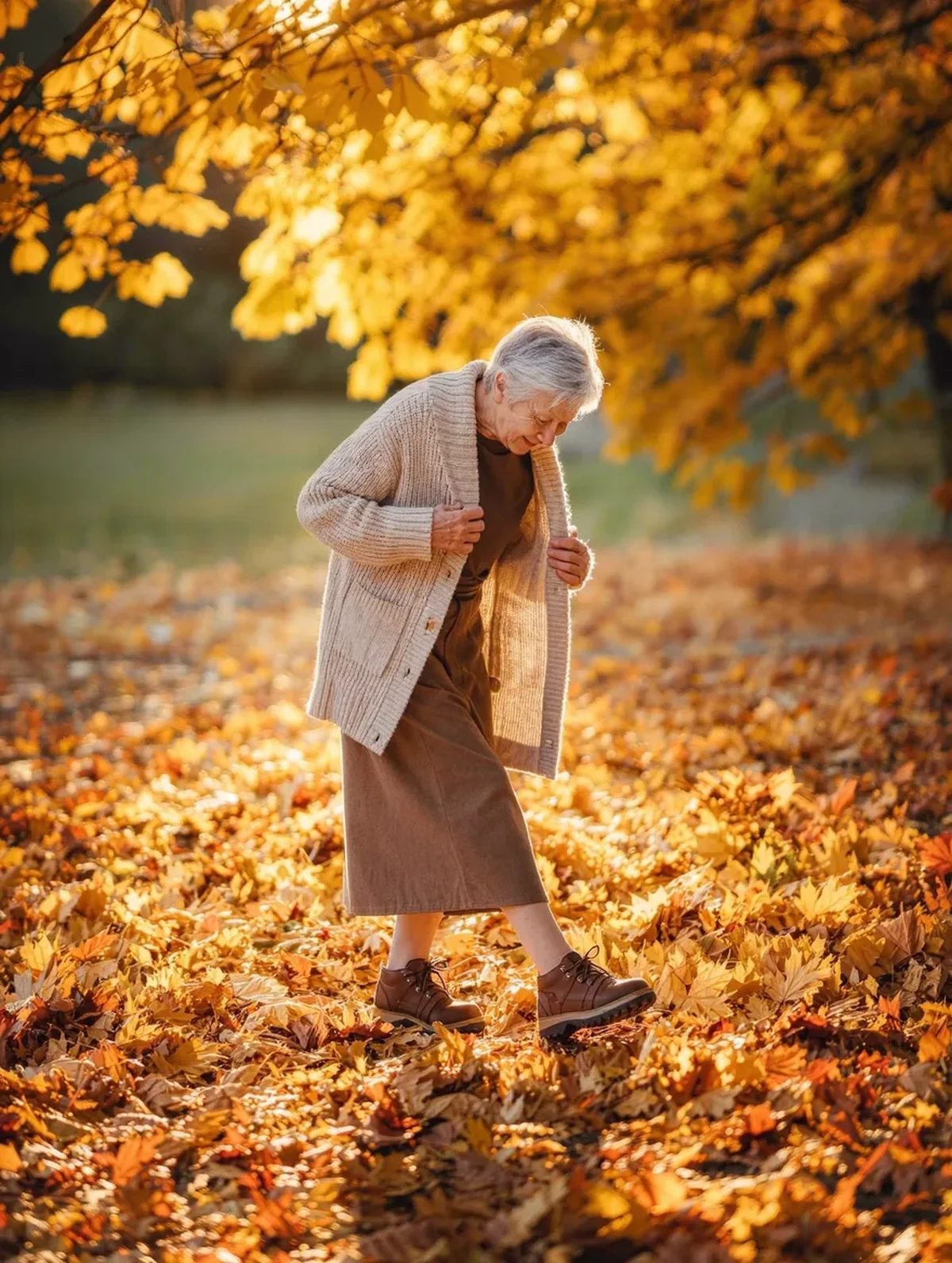
Every October the same thing happens. The park path turns golden, the sidewalk gets damp, and you suddenly think twice about every step. That pause is useful. It means you are paying attention to the one thing that changes outdoors this time of year.
Why do wet leaves make walking so risky?
Wet leaves act like a thin layer of ball bearings. Your shoe sole can slide across them before it finds solid ground. Leaves also hide cracks, roots, and curbs, so your foot may land on something higher or lower than you expected.
Your body needs a moment to notice and correct a slide. After 60, that correction can be a little slower, especially if your ankles and hips have been less active over the summer. A small slip becomes a fall when there is no time to catch yourself.
What footwear helps on slick autumn paths?
Look for a sole with a visible tread pattern, a low to moderate heel, and a snug heel counter that keeps your foot from sliding forward. Smooth leather soles and thin flat slippers are the most slippery choices on wet leaves.
If you walk outside often in fall, consider a pair of shoes you only use for the rainy season. Replace worn soles early. A tread that looks smooth is not doing its job anymore.
How to walk more carefully on leaves
Take shorter steps and keep your feet under your hips. A slightly wider stance gives you a steadier base. Look ahead for the next few steps rather than at the ground directly in front of you, so you can read the path.
Hold a handrail whenever one is available. If you use walking poles, check that the tips are not worn down. Avoid carrying a big bag that blocks your view or throws your balance off to one side.

Myth vs Fact: Only frail people need to worry about slips
Myth: slips are only a concern for people who already use a cane. Fact: many people who walk every day, garden, and feel fit can still slip on wet leaves. The risk comes from the surface and the speed of your reaction, not only from your general health.
Myth: balance practice is only for people with a problem. Fact: short balance practice keeps the stabilizing muscles ready, which is useful for everyone over 60.
Three quick drills to practice before the rainy season
Single-leg stance: stand near a counter and lift one foot for 10 seconds. Do 3 rounds per side. Heel-to-toe walk: walk 10 steps along a hallway with one foot directly in front of the other. Sit-to-stand: stand up from a sturdy chair without using your hands, 8 times.
Do these three drills three to four times a week. Stop if you feel dizzy, and keep a counter or wall within reach at all times.
FAQ: Slip Risk on Wet Leaves, Answered
Do I need a cane for fall walks?
Not always. If you feel unsteady on uneven ground, a walking pole or a cane can add confidence. Ask a clinician or physical therapist for a fitting if you are unsure.
Is it safer to skip walks when leaves are wet?
Not necessarily. Choose a flat, well-lit route, wear your grippiest shoes, and go during daylight hours when the path is dry if possible.
When should I talk to a doctor about balance?
If you have had a recent fall, feel lightheaded when you stand, or notice new unsteadiness, book a visit. This is general information, not medical advice.
TL;DR:
- Wet leaves reduce grip and hide the ground, which makes slips more likely after 60.
- Choose shoes with visible tread, a snug heel, and a low to moderate heel.
- Take shorter steps, look ahead, and use a handrail whenever you can.
- Practice single-leg stance, heel-to-toe walking, and sit-to-stand a few times a week.
You can still enjoy autumn walks. A few changes in footwear and pace, plus a little daily balance work, let you move through the season with more confidence.
Keep Reading
This article is for general informational and styling purposes only. Fit, sizing, and product availability may vary.