Why So Many Women Over 60 Start Strength Training Way Too Light — and Stay There

Quick Answer: Starting light is appropriate for learning form, but many women over 60 stay at that same light weight indefinitely out of injury fear — without gradual, appropriate progression, the weight becomes too light to build the actual strength that protects bones and joints long-term.
Starting cautious makes complete sense. The problem is when ‘cautious start’ quietly becomes ‘permanent plateau,’ because the fear that justified starting light never gets revisited once initial comfort is established.
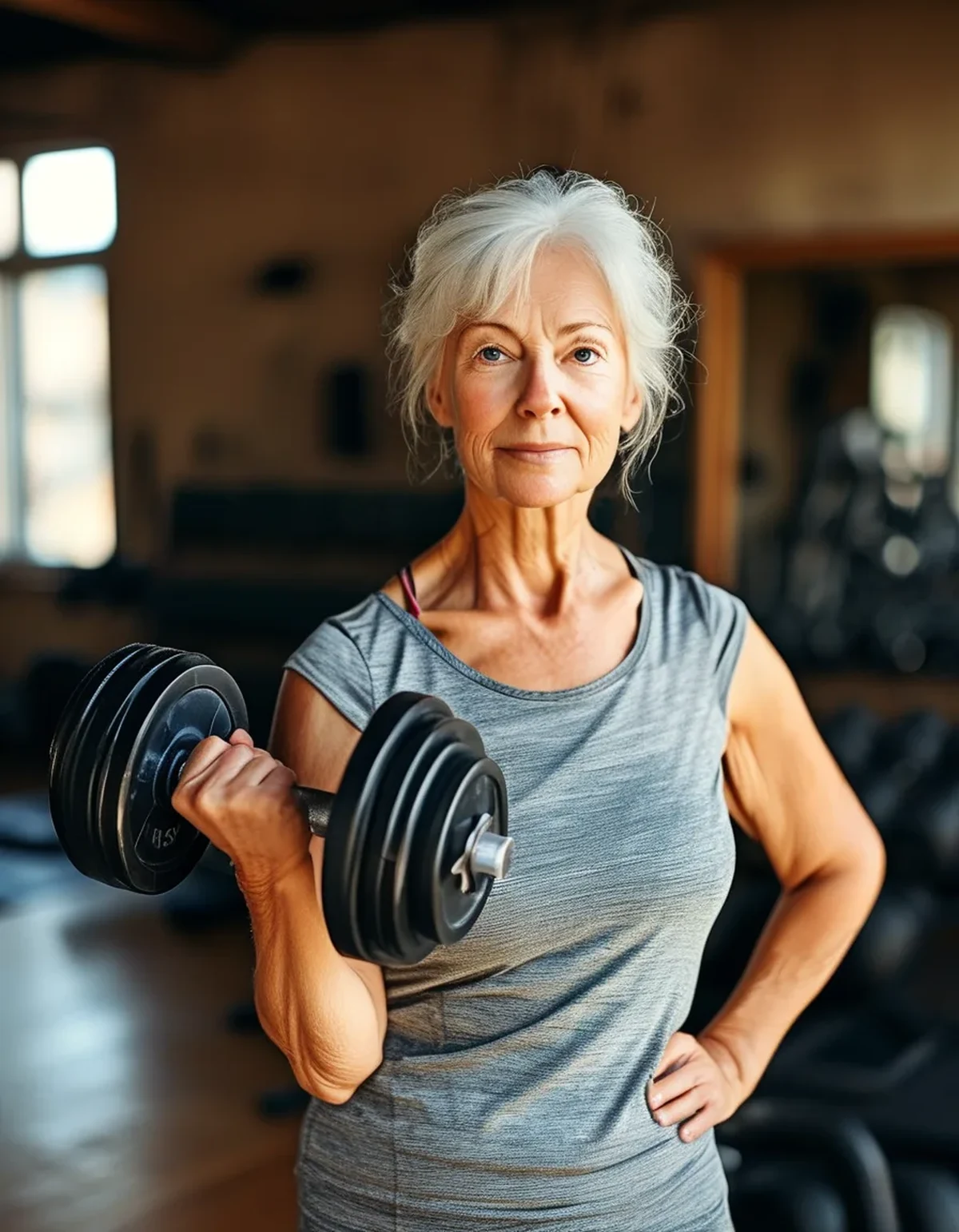
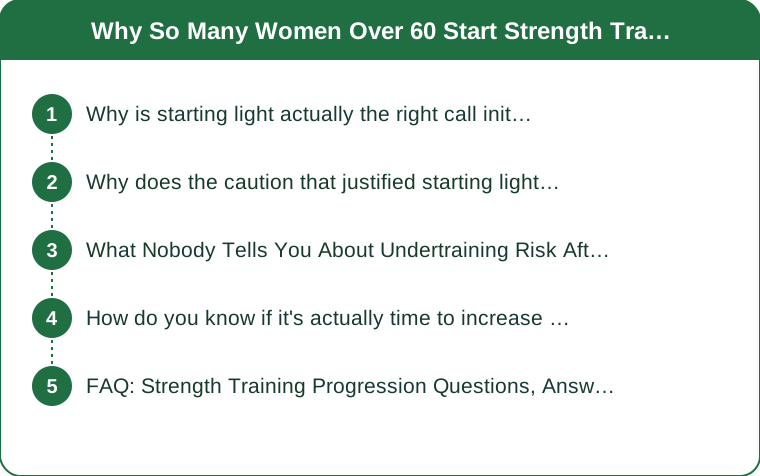
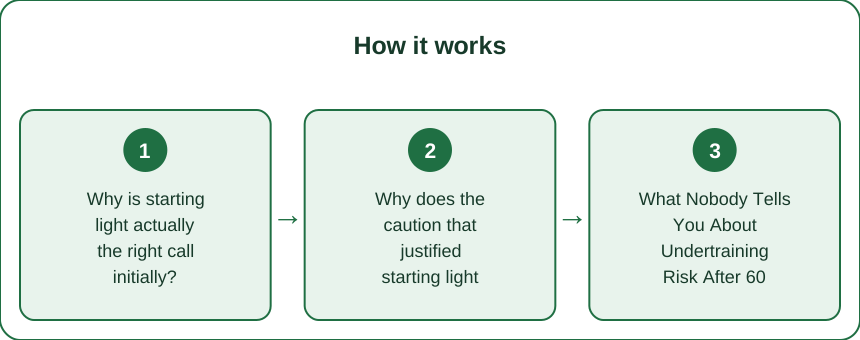
Why is starting light actually the right call initially?
Learning proper form with lighter weight reduces injury risk while your body adapts to new movement patterns — this is genuinely sound guidance, especially for anyone returning to strength training after years away or starting for the first time.
The issue isn’t the light start — it’s that many women never progress beyond that initial safe starting point, often for years, well past when their body has adapted and could safely handle more.
Why does the caution that justified starting light rarely get revisited?
Because progressing weight requires actively reassessing and choosing to add load, and if the original motivation was fear of injury, that same fear doesn’t automatically resolve just because your body has adapted — it takes a deliberate decision to reevaluate, which many people skip.
Without a coach or structured program prompting reassessment, it’s easy to stay at ‘safe’ weight indefinitely simply because nothing forced the question of whether it’s still appropriate.
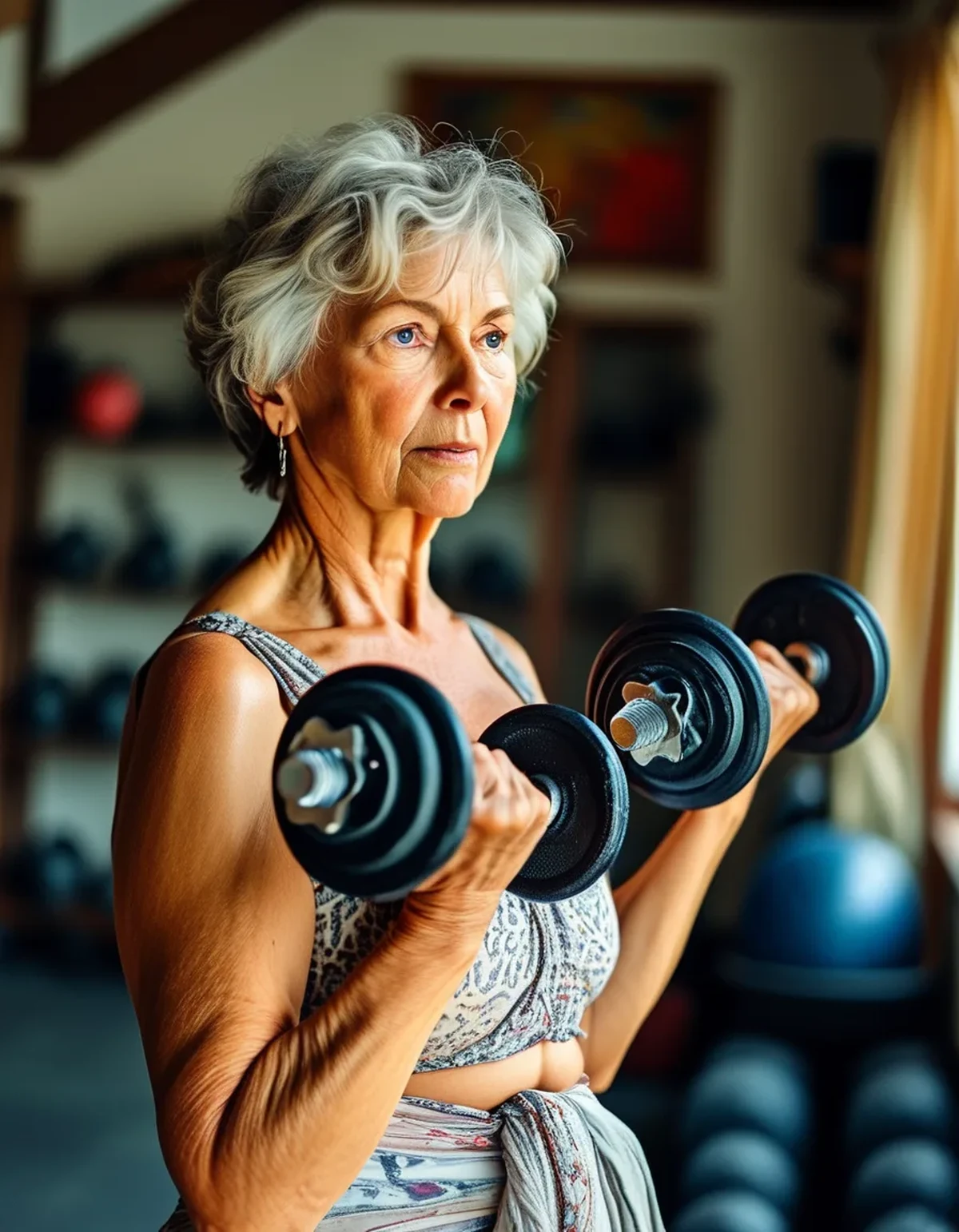
What Nobody Tells You About Undertraining Risk After 60
The framing around strength training and aging focuses heavily on injury from lifting, but research on bone density and muscle mass points to a real risk on the other side — insufficiently challenging strength training doesn’t provide enough stimulus to meaningfully slow age-related muscle loss (sarcopenia) or bone density decline.
What surprises many people: the weight needed to meaningfully stimulate strength and bone adaptation is usually higher than what feels instinctively ‘safe’ once your body has adapted past the beginner stage — true progressive overload is what protects against fall and fracture risk long-term, not staying permanently light.
How do you know if it’s actually time to increase weight?
If your last 2-3 reps of a set don’t feel genuinely challenging, that’s a reliable signal the current weight is no longer providing enough stimulus for continued adaptation, regardless of how many months or years you’ve been at that weight.
Progressing gradually — small increases, reassessed every few weeks — keeps the process safe while still ensuring you’re not permanently undertraining.
FAQ: Strength Training Progression Questions, Answered
Is it ever too late to start increasing weights after years at the same level?
No — muscle and bone respond to appropriate loading at any age; starting a gradual progression now still provides real benefit compared to staying static.
Should I work with a trainer specifically to know when to progress?
A trainer, especially one experienced with older adults, can meaningfully help by providing objective reassessment that’s easy to skip on your own.
What’s a safe rate of weight increase?
A common general guideline is small increases (5-10%) every 2-4 weeks once current weight stops feeling challenging in the last few reps, adjusted individually based on comfort and any health considerations.
TL;DR:
- Starting light is appropriate for learning form, but shouldn’t become a permanent plateau
- The fear that justified starting light rarely gets revisited without deliberate reassessment
- Insufficiently challenging weight doesn’t provide enough stimulus to protect bone density and muscle mass
- If the last 2-3 reps aren’t challenging, it’s a reliable signal to progress
Caution got you started safely — appropriate progression is what actually protects you long-term.
Keep Reading
This article is for general informational and styling purposes only. Fit, sizing, and product availability may vary.