7 Signs Your Strength Program After 60 Needs Adjusting

Quick Answer: The most common signals that a program past 60 needs changing are: no load increase in six weeks, soreness that outlasts 72 hours, dreading sessions, sleep getting worse rather than better, joints that ache more between sessions than during, everyday tasks not getting easier, and grip failing before the target muscle. Almost none of these call for training harder. Six of the seven are fixed by adjusting frequency, load, rest, or exercise selection - and most respond within two to three weeks.
Somewhere around the third month, a program that was working starts to feel like it is not. Here are the seven signals worth reading, and what each one is actually asking you to change.

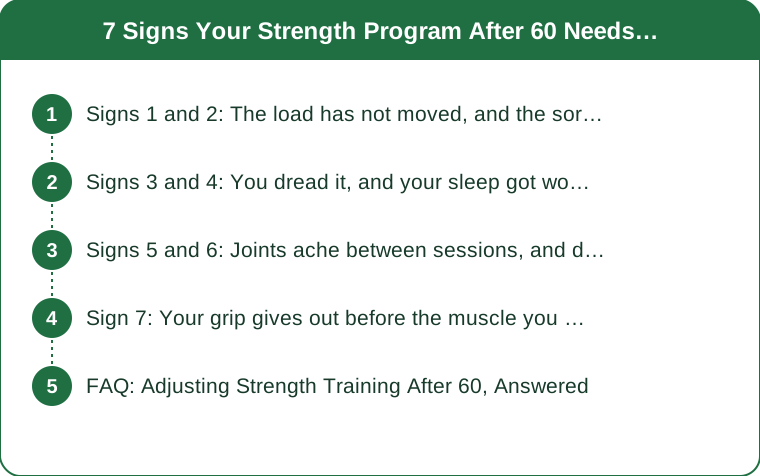
Signs 1 and 2: The load has not moved, and the soreness will not clear
1. You have used the same weight for six weeks
Progressive overload is the entire mechanism. Muscle and bone adapt to a demand slightly greater than what they have met before. Same weight, same reps, same everything for six weeks means the demand stopped being new around week three, and you have been maintaining rather than building since.
The fix is usually smaller than people think. Adding two and a half pounds to an upper body lift or five pounds to a lower body lift is enough. If jumping the weight is not possible with the equipment you have, add one repetition per set, or slow the lowering phase to three seconds - both increase the demand without new dumbbells.
Strength gains after 60 are absolutely achievable. Research consistently shows meaningful strength increases in adults in their sixties, seventies, and eighties following progressive resistance training. A stalled program is a programming problem, not an age ceiling.
2. Soreness is still there three days later
Normal muscle soreness peaks around 24 to 48 hours and clears by 72. Soreness that reliably lasts longer means the jump in volume or intensity outpaced your recovery capacity, which does lengthen somewhat with age.
The adjustment is recovery, not toughness. Add a day between sessions for that muscle group, cut the working sets by one, and check protein intake - older adults need more protein per meal to trigger the same muscle-building response, with roughly 25 to 30 grams per meal a commonly cited target.
And distinguish soreness from pain. Diffuse, symmetrical muscle tenderness that eases as you move is soreness. Sharp, localized, or joint-centered pain is not, and it should be assessed rather than trained through.
Signs 3 and 4: You dread it, and your sleep got worse
3. You have started dreading the sessions
Take this as data, not as a character flaw. Persistent dread almost always tracks something structural: sessions that are too long, an exercise that hurts, a time of day that does not fit, or a program with no variety in it.
Audit the four variables before you audit your discipline. Cut a 75-minute session to 40 - the difference in results is far smaller than the difference in adherence. Swap the one exercise you have quietly hated for eight weeks. Move the session to a time when you have energy rather than the time a plan told you.
A program you do three times a week for a year beats a better program you abandon in March. That is not a compromise, it is the actual math of long-term strength.
4. Your sleep is worse since you started
Strength training normally improves sleep quality. If yours has deteriorated, the usual suspects are training too close to bedtime, too much total volume, or too much high-intensity work in the week.
Try the simple changes first. Move the session at least three hours before bed, then reduce the number of sets taken close to failure. Training hard is compatible with sleeping well; training hard six days a week with no easy days often is not.
Worsening sleep is an early overreaching signal. It tends to show up before performance drops, which makes it genuinely useful information rather than an inconvenience.

Signs 5 and 6: Joints ache between sessions, and daily life has not changed
5. Your joints hurt more on rest days than during training
This pattern is specific and worth knowing. Muscular fatigue is worse during and immediately after training. Joint irritation is often worse the following day and on rest days, particularly in the morning.
The usual causes are exercise selection and range, not load. Deep, loaded flexion at the knee, overhead pressing with limited shoulder mobility, and high-rep repetitive movements are common irritants. Swapping to a version that avoids the painful range - a floor press instead of an overhead press, a box squat instead of a deep squat - usually resolves it while keeping the training effect.
Do not simply reduce weight and keep the same movement. If a range of motion is the irritant, doing it lighter for more reps often makes it worse.
Existing arthritis does not exclude you from strength training - it usually improves with appropriate loading - but the exercise selection needs to work around the joint. That is a conversation worth having with a physical therapist.
6. Carrying groceries has not gotten easier
Gym numbers going up while real tasks stay hard means the program is missing carryover. Machine-based training builds strength in a supported, fixed path. Life happens unsupported, on one leg, with awkward loads.
Add the missing patterns. A loaded carry - walking 30 to 40 feet holding weight in one or both hands - transfers directly to groceries and luggage. Sit-to-stand from a chair transfers to every chair you use. Step-ups transfer to stairs and curbs.
Balance and single-leg work belong here too. Most everyday demands and nearly every fall risk situation happen on one leg. A program with no single-leg content is missing the most functionally relevant piece.
Sign 7: Your grip gives out before the muscle you are training
This is the most commonly misread signal on the list. You set up for a row or a deadlift, and the set ends because your hands opened - not because your back was done. People conclude their back is not getting stronger when the truth is their back never got a full working set.
Grip strength declines earlier and faster than most other strength qualities, and it is a well-established marker associated with broader health outcomes in older adults. It deserves direct attention rather than being treated as an inconvenience.
Two fixes, and use both. Short term, use lifting straps on your heaviest pulling sets so the target muscle gets properly loaded. Long term, train grip directly: farmer carries for 30 to 40 seconds, dead hangs from a bar with feet lightly supported, or simply holding the last rep of a row for five seconds.
Do not skip the direct work by relying on straps alone. Straps solve the training problem; they do nothing for the grip strength that opens jars, carries bags, and correlates with independence.
Check the bar thickness too. Thicker handles dramatically increase grip demand, so if a particular set of dumbbells feels impossible to hold compared with others, the handle may be the variable rather than your hands.
And note what this sign proves. If grip is your limiter, your target muscles have room to grow that you have not yet used - which is a considerably better position than a genuine plateau.
This is general information, not medical advice. Persistent joint pain, unexplained fatigue, chest symptoms, or dizziness during exercise should be assessed by a healthcare professional before you continue.
FAQ: Adjusting Strength Training After 60, Answered
How often should I change my strength program after 60?
Change a variable when progress stalls for about six weeks, not on a fixed calendar. Often that means adding small load increments, one repetition per set, or a slower lowering phase rather than switching to entirely new exercises.
Is it normal to be sore for three days after lifting at 65?
Occasionally after a new exercise, yes. Consistently, no - soreness that reliably exceeds 72 hours means volume or intensity outpaced recovery. Add a day between sessions for that muscle group, drop a set, and aim for 25 to 30 grams of protein per meal.
Can you still build muscle and strength after 60?
Yes. Progressive resistance training produces meaningful strength gains in adults through their sixties, seventies, and eighties. A stalled program almost always reflects a programming issue rather than an age limit.
Why does my grip fail before my back during rows?
Grip strength declines earlier than other strength qualities, so it commonly becomes the limiter on pulling exercises. Use straps on your heaviest sets so the target muscle is fully loaded, and separately train grip with carries and timed holds.
TL;DR:
- Six weeks at the same load means the stimulus is gone - add small increments, a rep, or a slower lowering phase rather than a whole new program.
- Soreness past 72 hours, worsening sleep, and dread are recovery and adherence signals, not reasons to push harder.
- Joint pain that is worse on rest days usually points to exercise selection and range of motion, not to load.
- If daily tasks have not gotten easier, add carries, sit-to-stands, step-ups, and single-leg work - the patterns that actually transfer.
- Grip failing first means your target muscles are under-trained, not plateaued: use straps for heavy sets and train grip directly.
- Persistent pain, unexplained fatigue, or dizziness warrants a professional assessment. This is general information, not medical advice.
Six of these seven signals are asking you to change a variable, not to try harder. That is good news - it means the ceiling you are feeling is in the program, not in you.
Keep Reading
This article is for general informational and styling purposes only. Fit, sizing, and product availability may vary.