7 Things That Change About Recovery After 60 That Nobody Warns You About

Quick Answer: Training capacity holds up remarkably well past 60 - what changes is recovery. Soreness peaks later, arrives more unpredictably, and takes about a day longer to clear; sleep gets lighter and less restorative; protein needs rise while appetite often falls; and warm-up needs roughly double. None of this means training less. It means spacing the same work differently and treating the gaps between sessions as part of the program rather than the empty bits.
The session felt fine. It was Wednesday that surprised you, two full days after a Monday that seemed easy at the time.

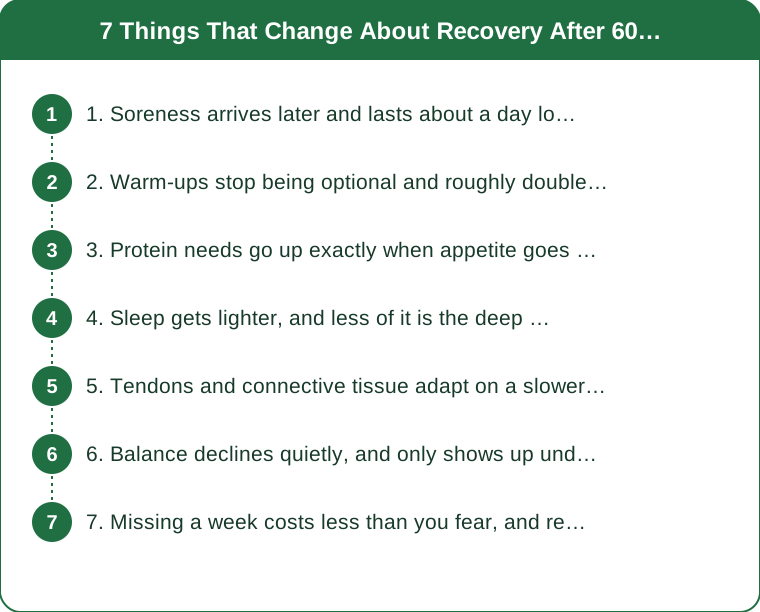
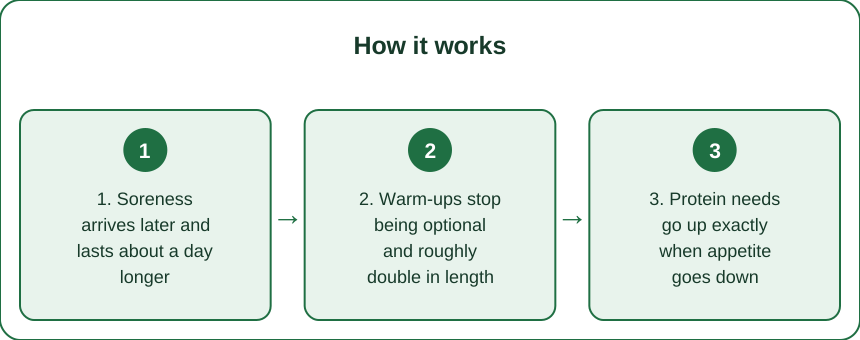
1. Soreness arrives later and lasts about a day longer
Delayed onset muscle soreness has always peaked around 24 to 48 hours after unfamiliar work. After 60, the peak commonly shifts toward the back of that window and the tail extends, so the worst day is often day two rather than day one, and traces linger into day three or four.
Why this matters practically: if you judge Monday’s session by how you feel Tuesday morning, you will consistently underestimate it and schedule Wednesday too hard. The honest check is Wednesday, and by then you have often already made the decision.
The adjustment is simple: leave 48 hours between hard sessions for the same muscle group, rather than 24. That usually means two lower-body sessions a week instead of three, with the freed day used for walking or mobility rather than lost.
One caveat worth knowing: soreness is a poor measure of how useful a session was at any age. It mostly reflects novelty. A new movement produces soreness the first two or three times and then stops, even as you get stronger on it - so a lack of soreness after week three is a sign the program is working, not a sign it is too easy.
2. Warm-ups stop being optional and roughly double in length
Synovial fluid distribution, tissue compliance, and the neural side of movement preparation all take longer. The five minutes that used to be enough tends to become eight to twelve, and the difference is most obvious in the first working set.
The reliable structure is three stages, and it takes about ten minutes. Five minutes of general movement that raises temperature - a walk, a bike, marching on the spot. Then joint-specific work for whatever you are about to train: hip circles and ankle rocks before squats, shoulder passes before pressing. Then two or three progressively heavier sets of the actual movement itself.
The third stage is the one people skip and the one that matters most. Jumping straight to a working weight after general cardio produces a first set that feels disproportionately hard and often a joint that complains for the next two days.
A useful marker: the first working set should feel roughly as good as the second. If it consistently feels worse, the warm-up is short, not the body old.
3. Protein needs go up exactly when appetite goes down
Older adults show anabolic resistance - the same dose of protein produces a smaller muscle-building response than it did at 30. Current guidance for active adults over 60 sits around 1.2 to 1.6 grams per kilogram of body weight per day, meaningfully above the general population recommendation.
The distribution matters as much as the total. Roughly 25 to 40 grams in a sitting appears to be the threshold that reliably triggers the response, which means three or four solid protein servings a day beats one large evening meal carrying the entire load.
The practical problem is that appetite typically declines with age, so hitting a higher target on a smaller appetite requires deliberate structure rather than eating more in general. Breakfast is where most people are short - a typical toast-and-fruit breakfast delivers under ten grams.
Three easy fixes that require no extra volume of food: Greek yogurt or eggs at breakfast instead of cereal, a protein source added to the meal you currently eat lightest, and keeping cooked chicken or tinned fish available for the day the plan collapses. This is general nutritional information, not medical advice, and anyone with kidney disease should discuss protein targets with a doctor.

4. Sleep gets lighter, and less of it is the deep kind
Slow-wave sleep - the deep stage most associated with physical restoration - declines substantially from midlife onward, and continues to fall through the sixties and seventies. Total sleep time often looks similar; the composition does not.
This changes how recovery is distributed. Less deep sleep per night means recovery leans more heavily on the days between sessions rather than on the night after. It is another argument for 48-hour spacing rather than a reason to train less.
What genuinely helps, in rough order of effect: consistent wake time, morning outdoor light exposure within an hour of waking, finishing hard training more than three hours before bed, and keeping the bedroom cool. Evening alcohol is worth naming specifically - it hastens sleep onset and then suppresses the deep and REM stages you are already short on.
What matters less than the internet suggests: total hours as a target. Consistency of timing predicts how you feel more reliably than duration does, and chasing a number tends to produce anxiety that costs more sleep than it gains.
5. Tendons and connective tissue adapt on a slower clock than muscle
Muscle responds to training within weeks. Tendon remodelling runs on a considerably longer timeline - months rather than weeks - and that gap widens with age as tissue turnover slows.
This produces the classic six-week problem. Strength climbs, confidence climbs, load climbs to match, and then the Achilles or the elbow or the shoulder starts complaining, because the muscle was ready and the tendon was not.
The protective rule is boring and effective: increase load by no more than about 10 percent per week, and hold each new load for at least two weeks before the next step. A slower ramp costs you almost nothing over a year and prevents the six-week setback that costs six weeks.
Slow tempo work helps here specifically. Taking three seconds on the lowering phase loads the tendon under control and appears to support tendon adaptation better than fast repetitions at the same weight. It also makes lighter loads productive, which is useful when the joints want a lighter week.
6. Balance declines quietly, and only shows up under distraction
Single-leg standing balance starts declining well before people notice, because everyday balance demands are usually simple. The deficit surfaces when a second task is added - carrying something, turning your head, talking, or standing on an uneven surface in poor light.
That is why balance training after 60 needs to include the distraction, not just the stance. Standing on one leg while brushing your teeth is a genuine drill. So is standing on one leg while looking left and right, or while holding a shopping bag on one side only.
A sensible weekly minimum is roughly ten minutes total, spread across the week, in short doses. Thirty seconds per leg while the kettle boils, done daily, adds up to more than a monthly dedicated session and fits where a session does not.
Always have something within reach. The point is to challenge balance safely, and a hand near a counter lets you push the difficulty higher than you otherwise would - which is what actually drives improvement.
7. Missing a week costs less than you fear, and restarting too hard costs more
Detraining after one week off is minimal - strength is largely retained, and much of what is lost in two to three weeks is neural and returns quickly. The idea that a holiday undoes months of work does not match the evidence.
What does cause real setbacks is the restart. Coming back at the load you left at, on a body that has not been under load for a fortnight, is the most common route to a strain and to the six weeks off that follows.
The reliable protocol is two-thirds for two sessions. Return at roughly two-thirds of your previous working weight for the first two sessions, then step back up. It feels unnecessarily easy, which is exactly why it works.
And after a longer absence - four weeks or more - add a week of movement-only rebuilding first. Bodyweight versions of your main lifts, full range, slow tempo. It rebuilds the pattern before you rebuild the load, which is the order the tissue prefers.
The larger point behind all seven items: almost none of them argue for training less after 60. They argue for spacing the same work differently, warming up longer, eating protein earlier in the day, and being patient in exactly two places - the ramp and the restart.
TL;DR:
- Soreness peaks later and lingers about a day longer, so judge a session on day two and space hard work 48 hours apart.
- Warm-ups roughly double to eight to twelve minutes, and the ramp-up sets in the actual movement are the part that matters.
- Protein needs rise to around 1.2 to 1.6 g/kg with 25 to 40 grams per sitting, usually while appetite is falling - breakfast is where most people are short.
- Deep sleep declines with age, so more of the recovery happens on the days between sessions.
- Tendons adapt months after muscle does; cap load increases near 10 percent a week and hold each step for two weeks.
- Balance fails under distraction, so train it with a second task, in short daily doses.
- A missed week costs little; returning at full load costs a lot - come back at two-thirds for two sessions.
The training does not need to shrink after 60. The space around it needs to be designed.
Keep Reading
This article is for general informational and styling purposes only. Fit, sizing, and product availability may vary.