7 Everyday Habits That Quietly Wreck Your Balance After 60

Quick Answer: Wearing unsupportive shoes indoors, staring at screens while walking, and skipping single-leg movements are three of the most common habits quietly accelerating balance decline after 60. The good news: all seven habits below are fixable without a gym membership.
Balance decline often gets blamed entirely on aging, but a lot of it comes from daily habits that slowly erode the small stabilizing muscles and reflexes you use without thinking. Here are seven worth catching early.

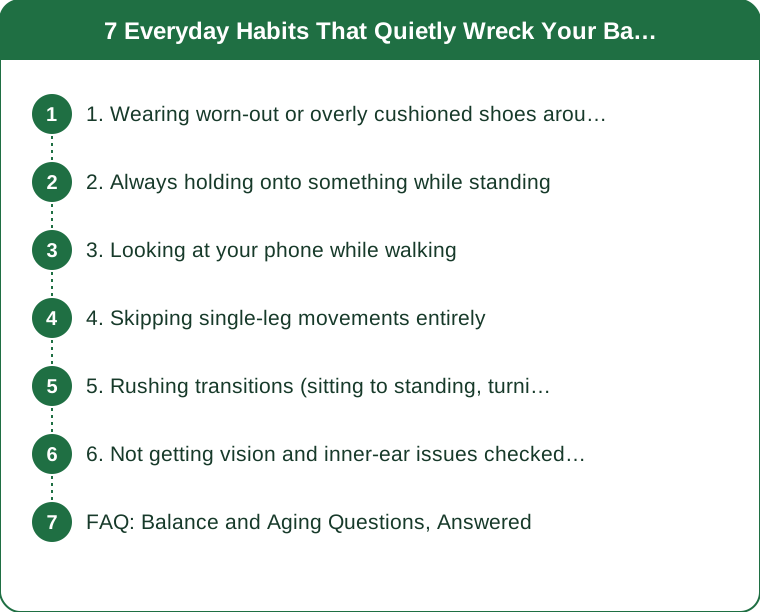
1. Wearing worn-out or overly cushioned shoes around the house
Old, flattened shoe soles or overly soft slippers reduce the sensory feedback your feet send to your brain about the ground beneath you — feedback that’s a core part of balance. Supportive, relatively firm-soled shoes (even at home) help maintain that feedback loop better than years-old slippers with no structure left.
2. Always holding onto something while standing
Reaching for a counter or chair back out of habit, even when you don’t strictly need to, means your stabilizing muscles never get challenged. If it’s safe to do so, practicing brief unsupported standing (near a wall for backup, not gripping it) keeps those muscles active instead of letting them quietly weaken.
3. Looking at your phone while walking
Walking while looking down at a screen removes visual input your brain uses for balance and coordination, and it’s one of the most common causes of trips and near-falls at any age — but the consequences are more serious after 60. Pausing to stand still before checking a phone is a small habit change with outsized safety benefit.

4. Skipping single-leg movements entirely
Everyday life rarely demands standing on one leg, so if you’re not deliberately practicing it, you may not have done so in years. Single-leg balance is one of the most predictive measures of fall risk, and it declines fast without any use — a daily 20-30 second single-leg stand near a counter is enough to slow that decline.
5. Rushing transitions (sitting to standing, turning quickly)
Fast transitional movements — standing up quickly, spinning to answer a phone — are a common moment when falls happen, because they combine a balance challenge with reduced attention. Slowing these transitions down slightly, especially first thing in the morning, reduces risk meaningfully.
6. Not getting vision and inner-ear issues checked regularly
Balance relies on three systems: vision, the inner ear (vestibular system), and proprioception (body position sense). An undiagnosed vision change or inner-ear issue can throw off balance in a way no amount of strength training fixes on its own — an annual check covers a blind spot most people don’t think to address.
- Sitting for most of the day without any weight-bearing movement Long sitting stretches reduce leg strength and hip mobility over time, both of which are directly tied to balance. Even short weight-bearing breaks — standing up every hour, a short walk — help maintain the strength base that balance depends on. This isn’t about intense exercise; it’s about not letting the muscles go completely unused for hours at a stretch.
FAQ: Balance and Aging Questions, Answered
Can balance actually improve after 60, or does it only decline?
Balance can genuinely improve at any age with consistent practice — it’s a trainable skill, not a fixed trait, similar to strength.
How often should I practice balance exercises?
A few minutes daily (even during routine moments like brushing teeth) is more effective than a longer session once a week, because balance responds well to frequent, brief practice.
When should a balance issue be checked by a doctor rather than addressed with home exercises?
If balance changes suddenly, or come with dizziness, vision changes, or a fall has already happened, see a doctor before continuing exercise — sudden changes have different causes than gradual decline.
TL;DR:
- Worn-out shoes and habitual counter-holding both quietly reduce balance feedback and muscle use
- Phone-walking and rushed transitions are common, fixable fall-risk moments
- Single-leg practice and regular vision/inner-ear checks address blind spots most routines miss
- Balance is trainable at any age — small daily habit shifts add up more than occasional big efforts
Pick one habit from this list to change this week rather than trying to fix all seven at once. This is general information, not medical advice.
Keep Reading
This article is for general informational and styling purposes only. Fit, sizing, and product availability may vary.