The Daily Mobility Flow for Seniors: 10 Gentle Minutes to Move Better Every Day

The first twenty minutes after getting out of bed tell you a lot. Stiff shoulders, tight hips, a back that needs a minute before it agrees to anything. Ten gentle minutes changes how the rest of that day goes — not dramatically, just noticeably, every single morning.
Quick Answer: A daily 10-minute mobility flow moving through neck, shoulders, arms, wrists, spine, hips, knees, and ankles eases morning stiffness and helps maintain the range of motion that daily tasks depend on. Every movement can be done seated or with a chair for support. Do it slowly, breathe through it, never force into pain, and add 60 seconds of balance work at the end for fall safety.
Why Does Daily Mobility Matter More Than Occasional Exercise?
Because range of motion follows a use-it-or-lose-it pattern, and the losses happen quietly.
Joints move freely partly because they’re moved regularly. A shoulder that only travels through half its available range during a typical day gradually stops offering the other half — and the loss usually goes unnoticed until something ordinary becomes awkward, like reaching a top shelf or fastening a seatbelt.
What ten daily minutes actually does:
- Eases morning stiffness, which is the most immediately noticeable benefit and often the reason people keep going
- Maintains the range you have, which is far easier than regaining range you’ve lost
- Supports daily function — reaching, turning, bending, stepping. These are the movements that keep independence intact
- Warms the body up for anything else you’re doing that day
The key word is daily. Ten minutes every morning does considerably more than an hour once a week, because maintenance responds to frequency rather than duration.
A note on what this is and isn’t: mobility work isn’t a substitute for strength training or balance work — it works alongside them. Think of it as the daily baseline that makes everything else easier.

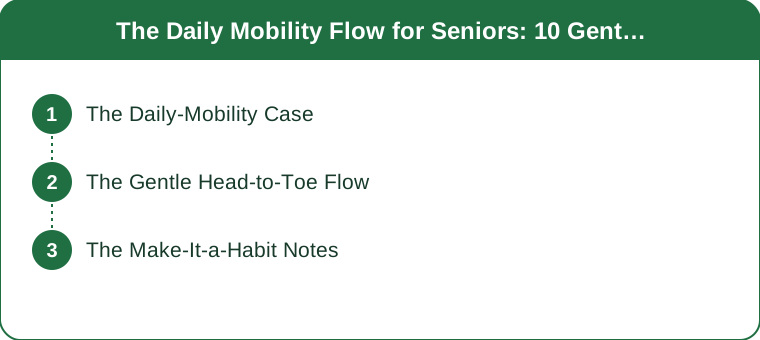
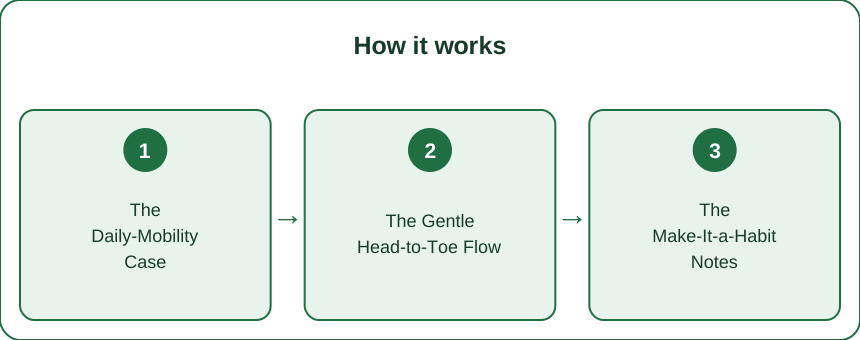
What Is the Head-to-Toe Flow?
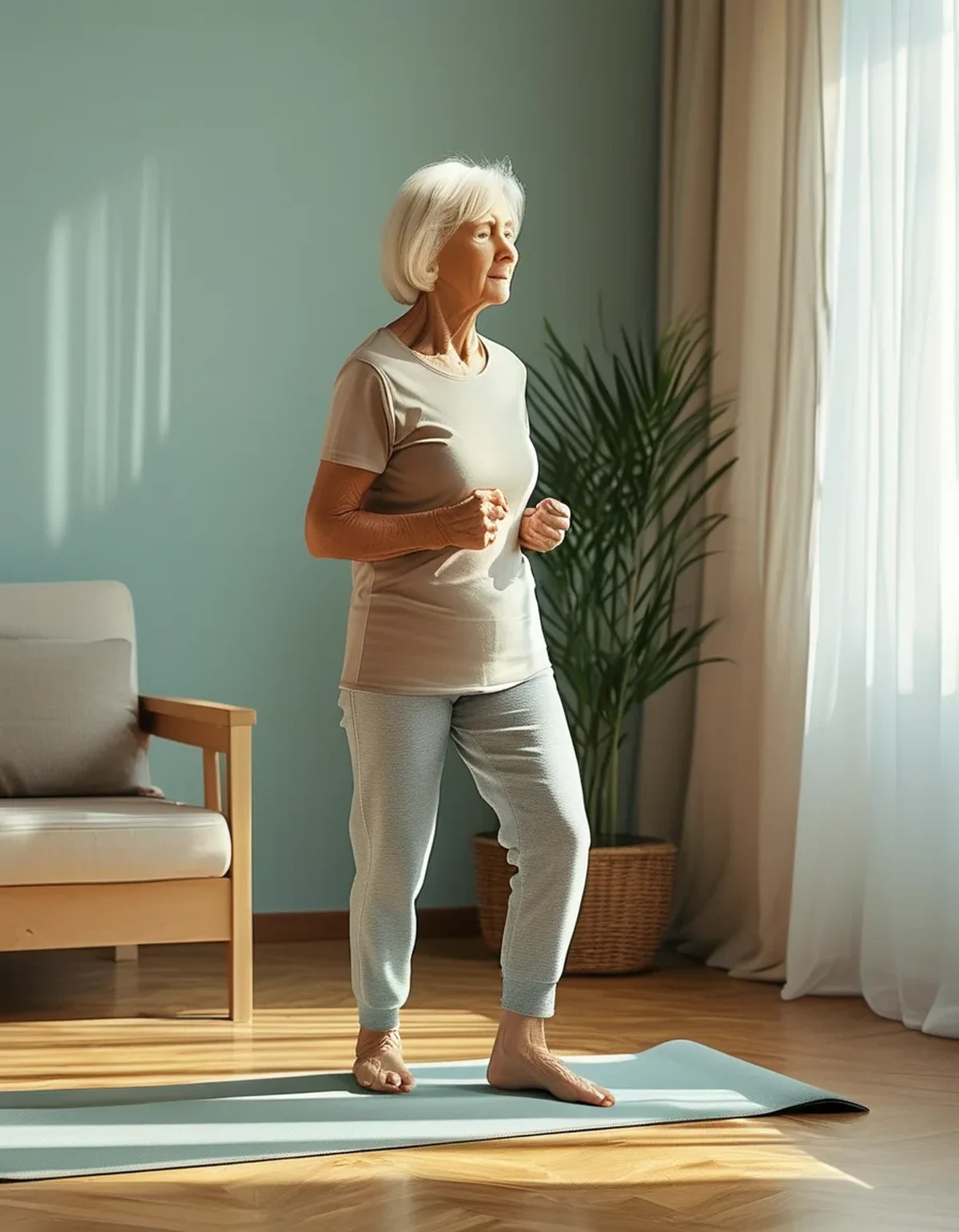
Work from the top down. Everything here can be done seated in a sturdy chair or standing with a hand on the chair back for support.
1. Neck (1 minute). Slowly turn your head to look over one shoulder, hold 3 seconds, return to center, repeat to the other side. Then tilt one ear toward one shoulder, hold, and switch. 5 each direction. Never roll the head in a full circle.
2. Shoulders (1 minute). Roll both shoulders backward 10 times, then forward 10 times. Then slowly raise both arms overhead as far as is comfortable and lower. 5 reps.
3. Arms and wrists (1 minute). Small arm circles, 10 each direction. Then wrist circles, 10 each way, and open and close your hands 10 times. These joints get constant daily use and very little deliberate movement.
4. Spine (2 minutes). Seated, place hands on knees. Gently arch your back and look slightly up, then round it and tuck the chin — a seated cat-cow. 8 slow reps. Then, with arms crossed over your chest, rotate your torso gently to each side, 5 per side.
5. Hips (2 minutes). Seated, lift one knee toward your chest as far as is comfortable, lower, alternate. 8 each side. Then, with a hand on the chair, make slow controlled circles with one leg from the hip, 5 each direction, each side.
6. Knees and ankles (2 minutes). Seated, straighten one leg out and lower it slowly, 8 per side. Then point and flex each foot 10 times, and circle each ankle 10 times per direction — ankle mobility matters more for balance than most people expect.
7. Balance (1 minute). Standing behind the chair with hands lightly on the back, lift one foot slightly and hold for 10 seconds. Three holds per side. Reduce hand support only when it feels genuinely steady.
Throughout: move slowly, breathe normally rather than holding your breath, and stay well inside the range that feels comfortable. Mild stretch is fine; sharp pain is a stop signal, not something to work through.
5 Mistakes Everyone Makes
- Forcing into pain. Mobility work should feel like gentle range, not effort. Pushing into pain produces guarding, which reduces range rather than increasing it.
- Rolling the neck in full circles. The backward portion compresses structures in the neck. Turn and tilt instead — it’s just as effective and considerably safer.
- Holding your breath. Breath-holding raises blood pressure and tightens everything you’re trying to loosen. If you can’t breathe normally, ease off.
- Doing it only when stiff. Stiffness is the signal you’ve already lost some ground. Daily maintenance is what prevents it, so the good days matter as much as the bad ones.
- Standing when seated would be safer. There is no benefit to standing through a routine you feel unstable in. The seated version does the same job.
Number four is the pattern that separates people who keep their range from people who chase it back.
How Do You Make It Stick?
Anchor it to something that already happens every day.
- Attach it to a fixed cue. After you get out of bed, or right after your first cup of coffee, or during the first ad break of the morning news. The existing habit becomes the reminder
- Morning is the highest-value slot, because that’s when stiffness is worst and the improvement is most obvious
- Keep it to ten minutes. A short routine you do daily beats a long one you do occasionally, and the ten-minute version is short enough that “I’m too busy” doesn’t hold up
- Do the seated version on hard days rather than skipping. A reduced session preserves the habit; a skipped one starts a gap
- Pair it with strength and balance work two or three times a week. Mobility maintains range, strength maintains capacity, and balance work reduces fall risk — you want all three
Comfortable clothing removes a small barrier: something soft with a stay-put waistband — a high waist legging or an easy pull-on pant — means the routine starts without a change of clothes standing in the way.
When to check with a professional: talk to your doctor or a physical therapist before starting if you have osteoporosis, a recent joint replacement, a spinal condition, severe arthritis, dizziness, or a history of falls. Several movements above may need modifying, and a physical therapist can adapt the flow to your specific situation — which is a much better outcome than skipping it entirely.
FAQ
How long before I notice a difference?
Most people notice easier mornings within one to two weeks. Meaningful improvements in range typically build over six to eight weeks of daily practice.
Can I do this if I use a walker or have trouble standing?
Yes. Every movement in the flow has a seated version, and the seated flow is a complete routine on its own. Do the balance portion holding a stable surface, or skip it and ask a physical therapist for a safe alternative.
Is mobility work the same as stretching?
They overlap but aren’t identical. Stretching holds a lengthened position; mobility moves a joint actively through its range. For daily maintenance and morning stiffness, the active version tends to be more useful.
TL;DR:
- Ten minutes daily beats an hour weekly — maintenance responds to frequency
- Work head to toe: neck, shoulders, arms and wrists, spine, hips, knees and ankles
- Every movement has a seated or chair-supported version
- Move slowly, breathe normally, never force into pain, and skip full neck circles
- Add 60 seconds of supported balance work for fall safety
- Anchor it to a fixed morning cue, and pair it with strength work a few times a week
Ten gentle minutes, head to toe, tied to your morning coffee. It won’t feel like much on any given day — and that’s rather the point, because it’s the days it doesn’t feel like much that add up.
Keep Reading
This article is for general informational and styling purposes only. Fit, sizing, and product availability may vary.