Sarcopenia: The Muscle Loss You Can't Feel Happening Until It's Significant

Quick Answer: Adults lose roughly 3–8% of muscle mass per decade after thirty, and it’s silent because your body compensates until it can’t. The first sign is usually functional — stairs, jars, getting off the floor — not visual. The defence is progressive resistance training at least twice a week, prioritising compound lifts, with adequate protein spread through the day. General information, not medical advice.
Nothing hurts. Nothing looks different. You feel exactly the same as last year.
That’s the problem. Sarcopenia doesn’t announce itself — it just quietly removes a few percent per decade until the day a jar won’t open and you find yourself surprised. By then a meaningful amount is already gone, and the earlier you’d started, the cheaper it would have been.
Why Is Muscle Loss So Hard to Notice?
The decline is too slow to feel. Roughly 3–8% per decade after thirty. Spread across ten years, that’s an imperceptible amount per month — well below the threshold where you’d notice anything day to day.
Strength declines even faster than mass. This is the part people miss. You lose strength — force per unit of muscle — quicker than you lose the muscle itself. So the mirror underestimates the problem, particularly through the years around menopause.
Your body compensates and hides it. As one muscle group weakens, others quietly take over and movement patterns adjust. You keep functioning normally right up until the compensation runs out — at which point the change feels sudden even though it wasn’t.
The first symptom is functional, not visual. Struggling with stairs. Jars. Getting off the floor without a hand. These are the early signals, and they arrive long before anything looks different.
Inactivity accelerates it invisibly. A sedentary stretch — an injury, a busy year, a desk-bound season — accelerates loss with no felt signal at the time. Silent doesn’t mean slow.
The reframe: the silence is the danger. It rewards acting early and punishes waiting for a symptom that arrives late by design.

What Does the Decade-by-Decade Reality Look Like?
The thirties: the invisible decade. The decline quietly starts, and an otherwise active lifestyle masks it entirely. Nothing feels different, which is precisely why it’s the cheapest decade to act in.
The forties: the creeping decade. The rate ticks up slightly, and for many people activity levels drift down at the same time. Two curves moving the wrong way together.
Perimenopause and the fifties: the accelerated decade. Hormonal shifts drive noticeably faster muscle loss. This is the steepest part of the curve for women, and it’s where resistance training shifts from beneficial to close to essential.
The sixties and beyond: the compounding decade. Decades of loss add up, and if strength work never started, the deficit is considerably harder to reverse. Not impossible — resistance training works at any age — just harder.
Earlier is easier, not merely better. Muscle built in your thirties and forties is muscle you don’t have to rebuild later, and rebuilding costs more effort per unit than preserving does.
Which Habits Actually Slow It Down?
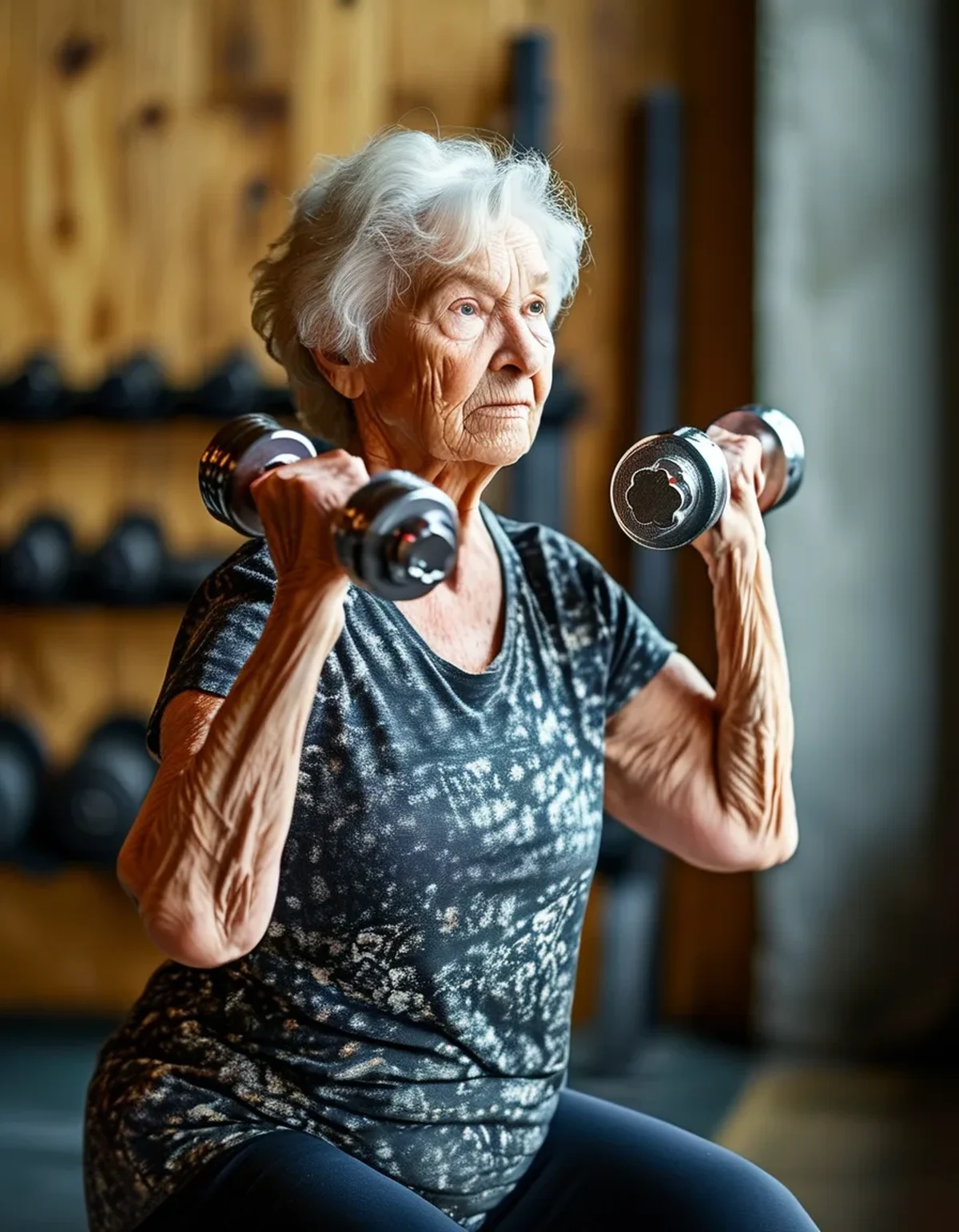
Progressive resistance training. The single most evidence-backed intervention there is. Note both words: resistance, meaning real load, and progressive, meaning that load increases over time. Walking is excellent for many things and is not a substitute for this.
Enough protein, spread through the day. Protein supports the muscle-building signal that resistance training creates. Spreading it across meals rather than loading it all at dinner matters — the signal responds to regular supply, and it also supports bone health alongside the muscle.
Twice a week, minimum. Two sessions weekly hitting the major muscle groups is the realistic floor. That’s the threshold, not the target — but it’s the number that actually moves things and it’s achievable for most people.
Prioritise compound movements. Squats, presses, rows, deadlifts, carries. They recruit far more muscle per session than isolation work, which matters enormously when you’re fitting training into a real life. Two compound-focused sessions beat five sessions of arm exercises.
Consistency across years. This is a decades-long habit, not a twelve-week programme. There’s no finishing line — which sounds bleak and is actually freeing, because it means no session has to be perfect and no missed week is a failure.
Myth vs Fact
Myth: Cardio is enough to prevent muscle loss. Fact: Cardio is excellent for heart and metabolic health but doesn’t provide the loading stimulus that preserves muscle. You need resistance.
Myth: It’s too late to start after 60. Fact: Resistance training builds strength at every age studied, including well into the eighties. Later is harder, never pointless.
Myth: Lifting will make you bulky. Fact: The physiology says otherwise for the vast majority of people, and it’s especially untrue for women past forty — where the actual struggle is holding onto muscle at all.
Myth: Light weights and high reps are safer for older adults. Fact: Progressive load, properly coached, is safer than becoming too weak to get off the floor. The load has to actually challenge you to do anything.
Frequently Asked Questions
How much protein do I need to prevent muscle loss?
Requirements rise with age rather than fall, and spreading intake across meals matters more than the exact total. A protein source at each meal is a practical starting point — and worth discussing with your doctor or a dietitian if you have kidney concerns.
Can I prevent sarcopenia with walking?
Walking is genuinely valuable for cardiovascular health, mood and general function, but it doesn’t provide the progressive loading muscle needs to be preserved. Walk and lift — the two aren’t in competition.
What if I’ve never lifted weights before?
Start with bodyweight movements and light resistance, and get some coaching on form for the compound lifts if you can. A few sessions with a trainer early on pays for itself in confidence and injury avoidance. Two sessions a week is enough to begin.
Do I need a gym?
Not to start. Resistance bands, a couple of adjustable dumbbells, and bodyweight progressions cover a lot of ground at home. What matters is that the load progresses — and comfortable, unrestrictive clothing you can actually squat and hinge in removes one more reason not to begin.
When to See a Professional
Talk to your doctor if you’ve noticed a marked drop in strength or function, unexplained weight loss, or frequent falls — sarcopenia can also be a symptom of other conditions worth ruling out. If you have heart conditions, joint problems, or osteoporosis, get guidance before starting resistance training rather than improvising. A physiotherapist or qualified trainer can build a programme suited to your starting point. This article is general information, not medical advice.
TL;DR:
- Muscle loss runs at roughly 3–8% per decade after thirty and is silent because your body compensates.
- Strength declines faster than mass, so the mirror underestimates the problem.
- The first sign is functional — stairs, jars, getting off the floor — not visual.
- The curve steepens around perimenopause and compounds into the sixties.
- Defence: progressive resistance training at least twice a week, prioritising compound lifts.
- Adequate protein spread across the day supports the training signal; consistency across years is the actual variable.
Keep Reading
This article is for general informational and styling purposes only. Fit, sizing, and product availability may vary.