Osteoporosis-Safe Exercise: What Builds Bone and What to Avoid
Quick Answer: The exercises that build bone are weight-bearing movement (walking, step-ups), resistance training 2–3 times a week, back-strengthening for posture, and balance work to prevent falls. What to modify with low bone density: deep forward bending, twisting under load, and high-impact jumping. Get cleared by your provider first, especially if you’ve had a fracture — and start light, because form matters more than weight here.
Bone isn’t a finished object you inherited at 30 and slowly lose. It’s living tissue that rebuilds itself in response to load — and that’s genuinely good news, because it means you have a say.
The catch is that a handful of very common movements — the toe-touch stretch, the weighted crunch, the enthusiastic spinal twist — put exactly the wrong kind of stress on a fragile vertebra.
Here’s what builds bone, what to swap out, and how to start without worrying you’re doing it wrong.
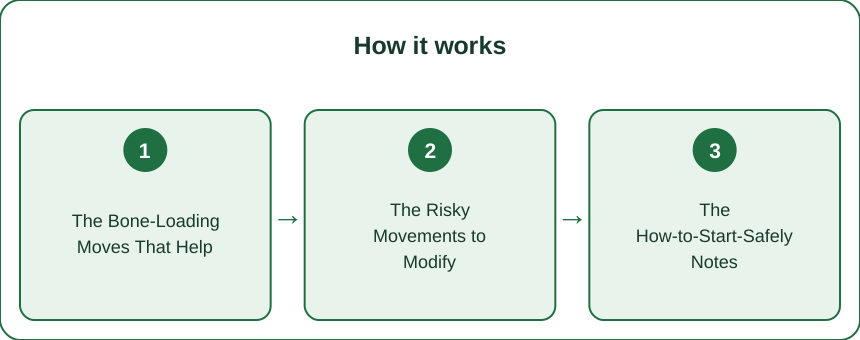
What Kind of Exercise Actually Builds Bone Density?
Bone responds to two things: being loaded through gravity, and being pulled on by working muscle. Everything below is one of those two.
Weight-bearing movement on your feet. Walking, marching, stair climbing and step-ups load your hips and spine through your own bodyweight. This is the foundation — aim for 30 minutes most days, and it doesn’t have to be continuous. Three 10-minute walks count.
Resistance training, 2–3 times a week. When a muscle contracts, it pulls on the bone it attaches to, and the bone responds by strengthening at that site. Resistance bands, light dumbbells, or bodyweight all work. 2 sets of 8–12 reps per exercise is a sensible starting dose, progressing slowly under guidance.
Back extensor strengthening. The muscles running up your spine hold you upright and counter the forward curl that low bone density encourages. Gentle prone lifts, seated rows, and simple posture work protect the vertebrae most at risk. This is the most under-prescribed item on the list.
Hip and leg loading. Sit-to-stands from a chair, supported squats, and step-ups load the hip — the fracture site with the most serious consequences. 10 sit-to-stands, 2–3 sets, is a genuinely effective exercise you can do at home.
Balance work — every single day. This is fracture prevention rather than bone building, and it’s just as important. Most osteoporotic fractures happen because someone fell. Standing on one leg by the kitchen counter for 20–30 seconds a side while the kettle boils is a real intervention.
The frame worth holding: loading builds the bone, balance prevents the fall. You need both halves.
Which Exercises Should You Avoid With Osteoporosis?
None of these are forbidden forever — they’re movements to modify, especially with a diagnosis or a fracture history.
Deep forward bending under load. Toe-touches, deep forward folds, sit-ups and weighted crunches round the spine forward, which concentrates compressive force on the front of vulnerable vertebrae — the classic site of compression fractures. Swap for: hinging at the hip with a flat back, and core work that doesn’t curl the spine (dead bugs, bird dogs, standing anti-rotation holds).
Forceful twisting, particularly with weight. Wrenching spinal rotation — golf-swing-style twists, loaded Russian twists — is the second risky pattern. Swap for: slow, controlled rotation through a small range with no added weight, and rotation that comes from the hips rather than the lower back.
High-impact jumping and jarring. Jumping, plyometrics and running on hard surfaces. This one is genuinely nuanced: impact does build bone, and for women with normal or slightly low density it can be beneficial. With established osteoporosis, the fracture risk usually outweighs it. This is a decision for your provider, not a blog.
Unsupported balance work if you’re unsteady. Wobble boards and eyes-closed single-leg standing when your balance is uncertain is how a bone-protective session becomes a fall. Swap for: the same exercises with a hand on a counter or chair back.
Anything sharp or painful. Pain is a stop sign, not something to push through.
The individual bit: your specific modifications depend on your bone density scores, your fracture history and your other conditions. A physiotherapist can build this for you in one or two sessions, and it’s worth it.
Myth vs Fact
Myth: If you have osteoporosis you should avoid exercise in case you break something. Fact: Inactivity accelerates bone loss and destroys the balance and muscle strength that prevent falls. Appropriately chosen exercise is one of the best things you can do — the answer is modification, not avoidance.
Myth: Calcium supplements are enough on their own. Fact: Nutrition supports bone, but bone only strengthens where it’s loaded. Calcium and vitamin D without weight-bearing and resistance work is half a strategy. (Talk to your provider about supplements — more isn’t automatically better.)
Myth: Swimming and cycling build bone. Fact: They’re excellent for your heart and joints but they’re not weight-bearing, so they don’t load bone the way walking and resistance work do. Keep them — just don’t count them as your bone training.
Myth: It’s too late to build bone after 60. Fact: Gains in bone density after menopause are usually modest, but the gains in muscle strength, balance and posture are substantial at any age — and those are what actually prevent the fracture.
How Should You Start Safely?
Get cleared first. Especially with a diagnosis, a previous fracture, or if you haven’t exercised in a while. Ask specifically what your DEXA scores mean for impact and forward bending.
Start light and build slowly. Bodyweight and bands before dumbbells. Two sessions a week before three. Consistency over intensity, every time.
Form before weight. Good posture and control first, load second. A few sessions with a physio or a class designed for bone health pays for itself.
Neutral spine, lifted chest, in everything. This single cue protects your back through most exercises.
Make walking the base habit. It’s the piece that runs on its own, needs no equipment, and stacks with the rest.
Practise balance daily. Thirty seconds a side, holding the counter. It’s the cheapest fracture insurance available.
Supportive footwear with good grip matters here more than most places — indoor and out. And clothing that lets you see your own alignment while you move, like a fitted high waist legging rather than loose trousers that hide your knee and hip position, makes it far easier to check your own form in a mirror.
FAQ
Can exercise reverse osteoporosis?
Exercise can slow bone loss and produce modest gains in density, but it generally doesn’t reverse established osteoporosis on its own. Its biggest contribution is dramatically reducing fracture risk through better strength, posture and balance. It works best alongside whatever medical treatment and nutrition your provider recommends.
Is walking enough to build bone density?
Walking is an excellent foundation and it loads the hips and spine, but on its own it’s usually not enough to meaningfully increase density. Adding resistance training 2–3 times a week is what makes the difference, because muscle pulling on bone is a stronger signal than walking alone.
How much weight should I lift with osteoporosis?
Start with resistance bands or light dumbbells you can control for 8–12 reps with perfect posture, and increase slowly. There’s no universal number — it depends on your bone density, history and current strength. This is exactly the question to bring to a physiotherapist, who can set a safe starting load in one session.
TL;DR:
- Build bone: weight-bearing walking, resistance training 2–3x/week, back extensor work, hip and leg loading.
- Prevent fractures: balance practice every day, 20–30 seconds a side, holding support.
- Modify: deep forward bending, loaded twisting, high-impact jumping, unsupported balance work.
- Start light, form before weight, neutral spine throughout.
- Get cleared by your provider first — especially with a diagnosis or past fracture.
- Bone is living tissue. Load it, protect it, and keep the balance work going.
Keep Reading
This article is for general informational and styling purposes only. Fit, sizing, and product availability may vary.