7 Strength Training Mistakes Women Over 60 Make (and How to Fix Each One)

Quick Answer: The most common strength training mistakes after 60 are avoiding weights entirely out of fear, skipping warm-ups, choosing weights too light to build real strength, ignoring balance work, poor progression pacing, neglecting grip strength, and stopping after reaching a comfortable plateau. Each one is easily correctable once identified.
Strength training remains one of the most protective habits for bone density, balance, and independence after 60 — but a handful of common, well-intentioned mistakes quietly limit how much benefit you actually get from the effort you’re putting in.

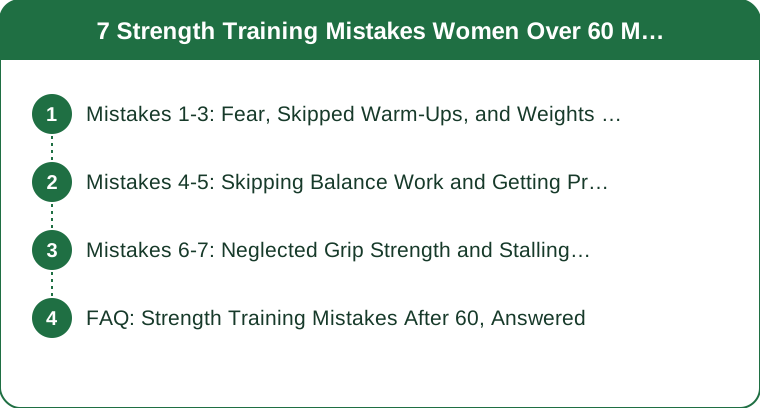
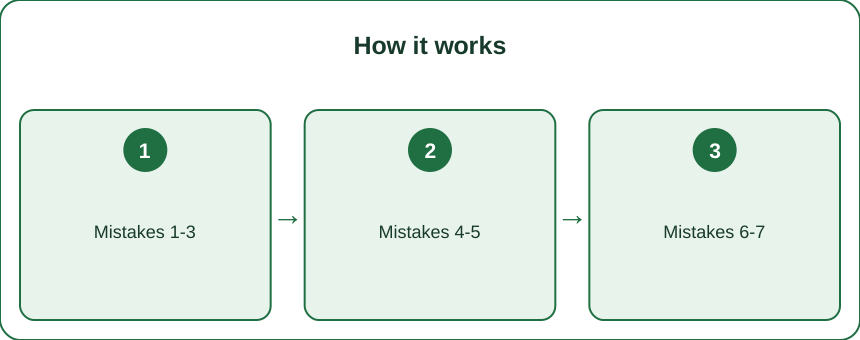
Mistakes 1-3: Fear, Skipped Warm-Ups, and Weights That Are Too Light
Mistake 1: Avoiding Weights Entirely Out of Fear
Many women over 60 stick to bodyweight or very light resistance out of concern that ‘real’ weights are unsafe, but research consistently shows that appropriately progressed strength training is one of the safest and most effective ways to preserve bone density and muscle mass at this age. The fix: start with a lighter weight than you think you need, focus on form for several sessions, then progress gradually with guidance from a trainer familiar with older adults.
Mistake 2: Skipping the Warm-Up
Jumping straight into working sets without preparing the joints and muscles raises injury risk more significantly after 60, when tissue elasticity and joint lubrication naturally decrease. A 5-10 minute warm-up of light cardio and dynamic movement (not static stretching) before lifting meaningfully reduces this risk.
Mistake 3: Choosing Weights Too Light to Build Real Strength
There’s a tendency to stay at a weight that feels comfortably easy indefinitely, but strength gains require progressive overload — gradually increasing weight or reps over time. The fix: if you can easily do more than 15-20 reps with good form, the weight is likely too light to keep building strength.
Mistakes 4-5: Skipping Balance Work and Getting Progression Pace Wrong
Mistake 4: Ignoring Balance Work Alongside Strength
Strength training builds muscle, but balance is a separate skill that needs its own dedicated practice — single-leg stands, heel-to-toe walks, or balance-board work. Skipping this leaves a real gap in fall-risk reduction even with a strong strength routine.
Mistake 5: Progressing Too Fast or Too Slow
Both extremes cause problems: progressing too fast raises injury risk before tissues adapt, while progressing too slowly (staying at the same weight for months) stalls results. A gradual 5-10% increase in weight every 1-2 weeks, once a weight feels manageable for all sets, is a reasonable, sustainable pace.

Mistakes 6-7: Neglected Grip Strength and Stalling at a Plateau
Mistake 6: Neglecting Grip Strength
Grip strength is a strong predictor of overall health and independence in older adults, but it’s rarely trained directly. Adding dead hangs, farmer’s carries, or simple grip-strengthener exercises twice a week fills a gap that most standard strength routines miss entirely.
Mistake 7: Stopping at a Comfortable Plateau
Once a routine starts feeling manageable, it’s tempting to stay there indefinitely — but strength and bone density benefits require continued, gradual challenge over years, not just the first few months. Revisiting your program every 2-3 months to add weight, reps, or new exercises keeps the protective benefits accumulating instead of leveling off.
FAQ: Strength Training Mistakes After 60, Answered
Is it too late to start strength training in your 60s or 70s if you’ve never lifted before?
No — research shows meaningful strength and bone density gains are achievable starting at any age, though starting with proper guidance matters more the later you begin.
How often should someone over 60 strength train each week?
Most guidance suggests 2-3 sessions per week targeting major muscle groups, with at least one rest day between sessions working the same muscles.
Should I work with a trainer, or is a general program safe to follow alone?
A trainer experienced with older adults is valuable at least initially, to correct form and set an appropriate starting weight — after that, many people continue safely and independently with occasional check-ins.
TL;DR:
- Avoiding weights out of fear is one of the biggest missed opportunities after 60
- Warm-ups and gradual progression both matter more as tissue recovery slows
- Balance work and grip strength are commonly skipped but genuinely important additions
- Strength benefits require ongoing, gradual challenge — not settling at a comfortable plateau
This is general information, not medical advice — check with your doctor before starting a new strength program, especially with existing joint or bone conditions.
Keep Reading
This article is for general informational and styling purposes only. Fit, sizing, and product availability may vary.