7 Reasons You Feel Unsteady on Your Feet After 60 (and What Fixes Each One)

Quick Answer: Unsteadiness after 60 usually comes from one or more of 7 fixable causes: weak ankles, poor vision correction, inner ear changes, medication side effects, low blood pressure on standing, weak hip muscles, or simply not practicing balance specifically. Identifying which one applies to you changes what actually helps.
‘You’re just getting older’ is the answer people get most often for feeling unsteady — and it’s rarely the useful one. Here are the 7 specific, checkable causes and what to do about each.

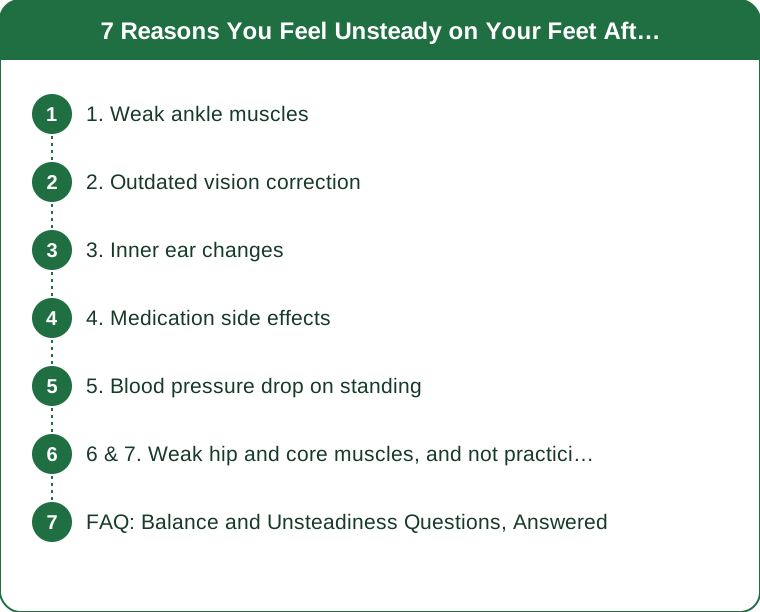
1. Weak ankle muscles
Ankles are your first line of balance defense, adjusting constantly to uneven ground without you noticing. Weak ankle muscles mean smaller wobbles turn into bigger corrections, which reads as unsteadiness.
Fix: Simple single-leg standing near a counter for support, 30 seconds per side, daily. Progress to standing on a slightly uneven surface (a folded towel) once that feels stable.
2. Outdated vision correction
Vision provides roughly 20% of your balance input, and even a mild, uncorrected prescription change can measurably affect stability — often before you’d notice reading is harder.
Fix: An annual eye exam is a balance intervention, not just a vision one. If you’ve put off an update because reading still feels fine, get it checked anyway.
3. Inner ear changes
The vestibular system (inner ear balance organs) naturally loses some sensitivity with age, and conditions like BPPV (a specific, treatable inner ear issue) become more common and can cause sudden dizziness with position changes.
Fix: If unsteadiness comes with spinning or dizziness specifically (not just wobbliness), see a doctor — this category is often quickly treatable rather than something to adapt around.

4. Medication side effects
Several common medications — blood pressure drugs, sedatives, some antidepressants — list dizziness or unsteadiness as a side effect, and the risk compounds when taking multiple medications together.
Fix: Bring your full medication list to a pharmacist or doctor and ask specifically about balance-related interactions. This single conversation catches a surprising number of cases.
5. Blood pressure drop on standing
Orthostatic hypotension — a blood pressure drop when you stand up — becomes more common with age and causes that specific lightheaded, unsteady feeling in the first few seconds after standing.
Fix: Stand up in two stages (sit on the edge of the bed for 10 seconds before fully standing) and mention this pattern to your doctor if it happens regularly.
6 & 7. Weak hip and core muscles, and not practicing balance specifically
6. Weak hip and core muscles
Hips and core stabilize your trunk over your feet; when they weaken, your whole upper body sways more with each step, which shows up as general unsteadiness rather than a specific ankle or vision issue.
Fix: Sit-to-stand practice from a chair, 8-10 reps, is one of the highest-value exercises for this specific cause — it directly trains the muscles doing the stabilizing work.
7. Not practicing balance specifically
Balance is a trainable skill that declines specifically when it isn’t used, separate from general fitness. Someone who walks regularly but never challenges balance directly can still become unsteady, because walking on flat ground doesn’t demand much correction.
Fix: Dedicated balance practice — standing on one leg, walking heel-to-toe, gentle direction changes — 5-10 minutes, most days. This is the one cause that responds fastest, often within 2-3 weeks of consistent practice.
FAQ: Balance and Unsteadiness Questions, Answered
Is feeling unsteady always something to worry about?
Occasional mild unsteadiness, especially when tired, is common. Sudden onset, one-sided symptoms, or unsteadiness paired with other new symptoms warrants prompt medical attention.
How do I know which of these 7 causes applies to me?
Start with the ones you can check yourself (vision exam date, medication list, whether you practice balance at all) before assuming it’s an unfixable aging process — most people have 1-2 clear, addressable causes.
Can balance actually improve after 60, or does it only get worse?
It can genuinely improve with targeted practice. Balance training studies in older adults consistently show measurable gains within weeks — this is one of the more responsive areas of physical training at any age. This is general information, not medical advice.
TL;DR:
- Unsteadiness usually traces to 1-2 specific causes, not general aging
- Check vision, medications, and blood pressure response as easy first steps
- Weak ankles, hips, and core are all trainable in a few weeks
- Dedicated balance practice — not just general activity — is often the missing piece
Sudden or one-sided symptoms need a doctor first; this is general information, not medical advice.
Keep Reading
This article is for general informational and styling purposes only. Fit, sizing, and product availability may vary.