7 Balance Mistakes Quietly Increasing Your Fall Risk After 60
Quick Answer: The most common balance-training mistakes after 60 are practicing only with eyes open, never adding real challenge, skipping strength work, and doing balance drills only when already tired. Fixing even two or three of these meaningfully lowers fall risk.
You’ve been doing the same balance exercise for weeks. It still feels just as wobbly as day one. That’s usually not a sign balance training doesn’t work — it’s a sign one of these seven mistakes is quietly canceling out the effort.
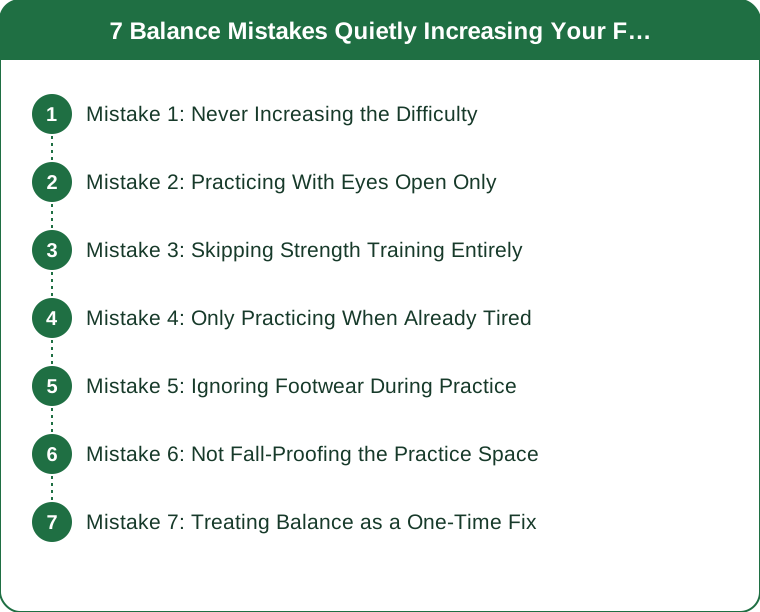
Mistake 1: Never Increasing the Difficulty
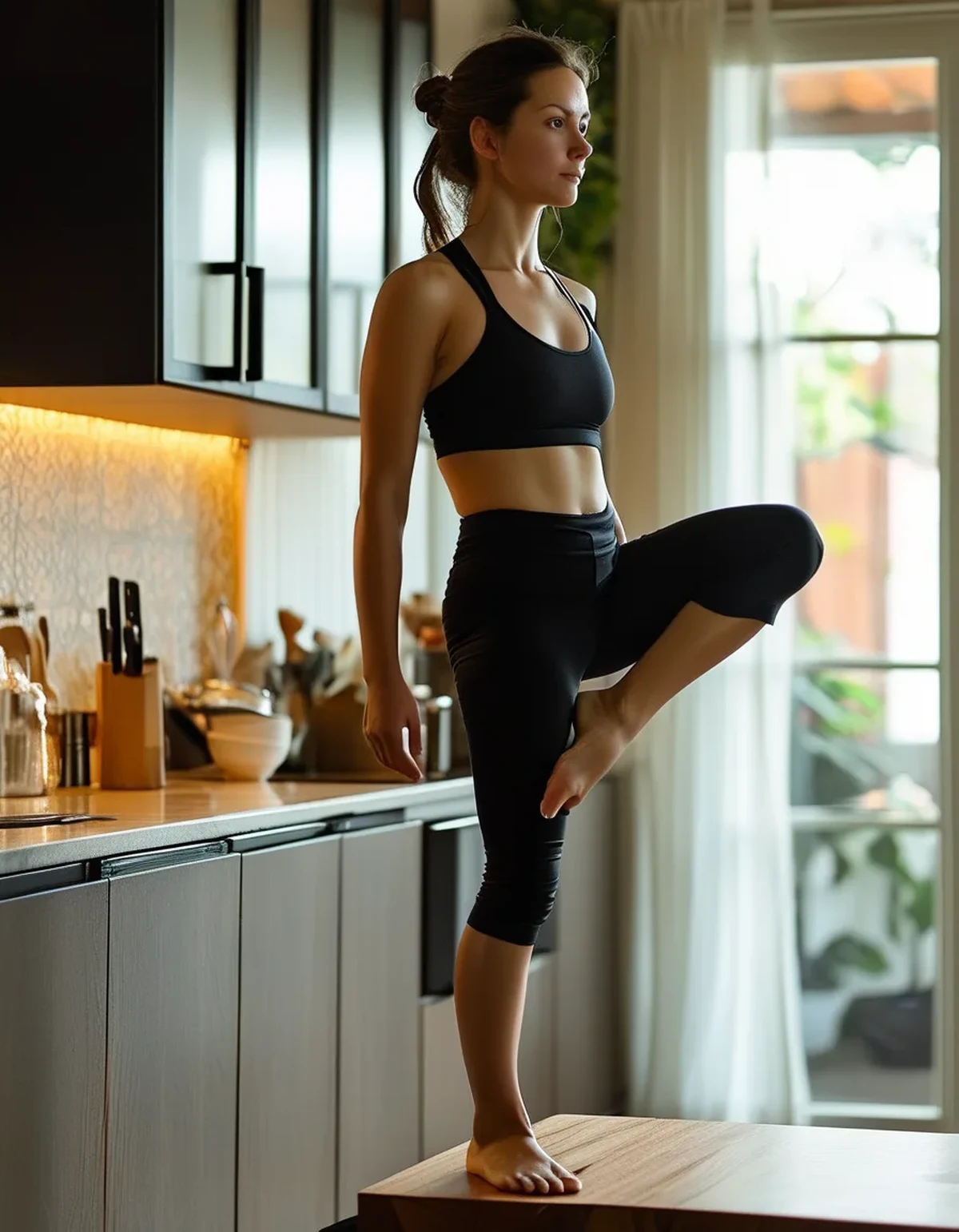
Doing the exact same balance exercise for months without progression is the single most common mistake. Balance improves through progressive challenge — once a move feels easy, it’s time to add a harder variation (narrower stance, eyes closed briefly, an uneven surface) or it stops driving adaptation entirely.
Mistake 2: Practicing With Eyes Open Only
Vision compensates heavily for balance deficits, which means eyes-open practice alone leaves a real gap unaddressed. Adding even 10-15 seconds of eyes-closed standing (near a counter for safety) trains the vestibular and proprioceptive systems that vision otherwise covers for.
Mistake 3: Skipping Strength Training Entirely
Balance isn’t just a coordination skill — it depends on leg and core strength to actually catch a stumble. Seniors who do balance drills without any strength work often plateau, because the muscles needed to recover from a real wobble simply aren’t strong enough yet.

Mistake 4: Only Practicing When Already Tired
Doing balance work at the end of a long day, after fatigue has already set in, means practicing in a compromised state rather than building the skill fresh. Morning or mid-day sessions, when energy and focus are higher, tend to produce faster, more reliable improvement.
Mistake 5: Ignoring Footwear During Practice
Practicing barefoot or in unsupportive slippers changes the sensory feedback your feet receive compared to the shoes you’ll actually wear outside. Training in the same type of shoe you wear daily makes the improvement transfer better to real-world situations.
Mistake 6: Not Fall-Proofing the Practice Space
Balance training inherently means practicing near your limits — which is exactly when a stable surface to catch yourself matters most. Skipping a nearby counter, wall, or sturdy chair turns useful challenge into unnecessary risk.
Mistake 7: Treating Balance as a One-Time Fix
Balance ability declines again if training stops, even after real improvement. Sustained fall-risk reduction comes from ongoing practice, several times a week, not a six-week program that ends once things feel better.
FAQ: How often should balance training happen to actually reduce fall risk?
Most research supporting meaningful fall-risk reduction uses at least 3 sessions a week, sustained over months rather than weeks, often combined with strength work.
Is it safe to do eyes-closed balance work alone at home?
Yes, as long as it’s done within arm’s reach of a stable surface like a counter or wall — that safety margin is what makes progressing to harder variations reasonable.
What’s a good starting balance exercise for someone who’s never done this before?
Standing on both feet with a narrower-than-normal stance for 30 seconds near a counter is a reasonable starting point, progressing to single-leg holds once that feels stable.
TL;DR:
- Increase difficulty once an exercise feels easy — repetition without progression stalls improvement
- Add eyes-closed and single-leg variations to train what vision otherwise compensates for
- Pair balance work with real strength training, not as a replacement for it
- Practice near a stable surface, in real shoes, when energy is higher
- Fall-risk reduction requires ongoing practice, not a short program
Fixing two or three of these mistakes at once tends to move the needle faster than perfecting any single exercise.
Keep Reading
This article is for general informational and styling purposes only. Fit, sizing, and product availability may vary.